


Debian has gotten some good press thanks to Federico Vaga and Nikos Tsipinakis, who presented a talk at MiniDebConf Winterthur this past weekend.
The two CERN engineers laid out why the organization is moving its particle accelerator control computers onto Debian 13, with more than 2,200 industrial computers and embedded systems set to run it by the end of 2026.
Though this doesn't mean that the whole CERN IT infrastructure is being moved. The migration is specific to the accelerator control layer—the front-end computers that talk directly to the equipment running the beam.
Why move?
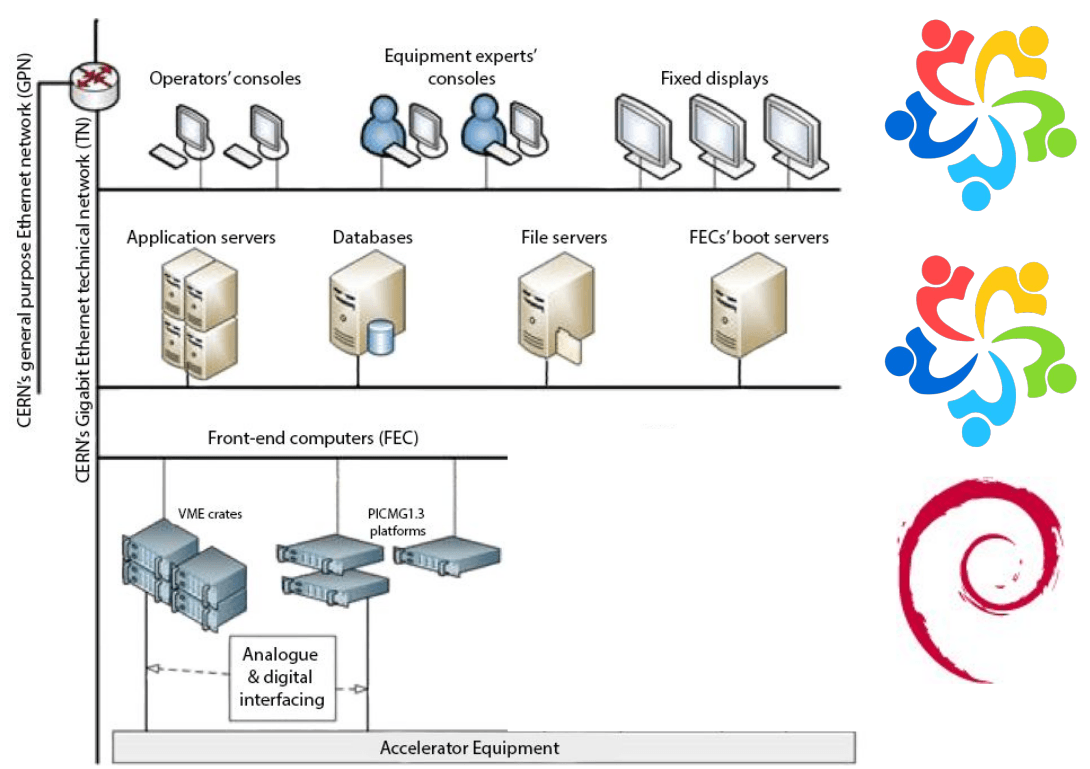
CERN ran a risk analysis in the second quarter of 2023, putting a number on what staying in the Red Hat ecosystem would cost them. The estimate came out to roughly CHF 5.4 million, with around 11 hardware boards needing a full redesign, plus hiring two electronic engineers, two software engineers, and two technicians just to handle it.
Racks would need reorganizing and rewiring, and most systems would be affected during commissioning. Even assuming bug-free replacements, CERN's own estimate put the odds of success at an optimistic 20 percent.
The reason for all that was a compiler flag. When Red Hat builds RHEL, it picks a minimum CPU generation the software will run on. RHEL 9's cutoff already excludes CERN's oldest boards, the kind running chips like Intel's old Core 2 Duo, which comprises about 47 percent of their fleet.
RHEL 10 raises that cutoff again, and this time even newer Ivy Bridge-generation boards, another 17 percent, fall on the wrong side of it.
The release strategy
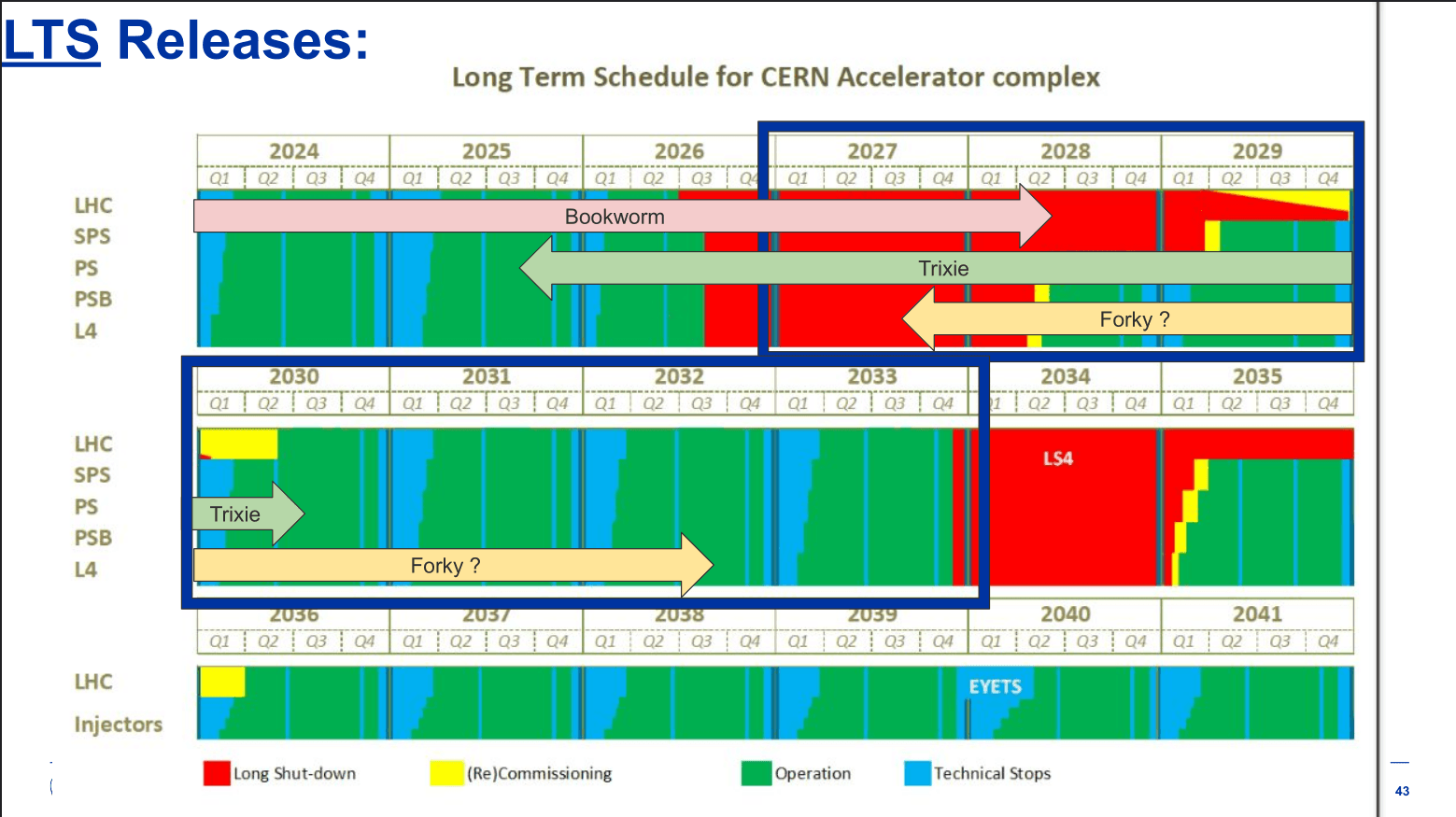
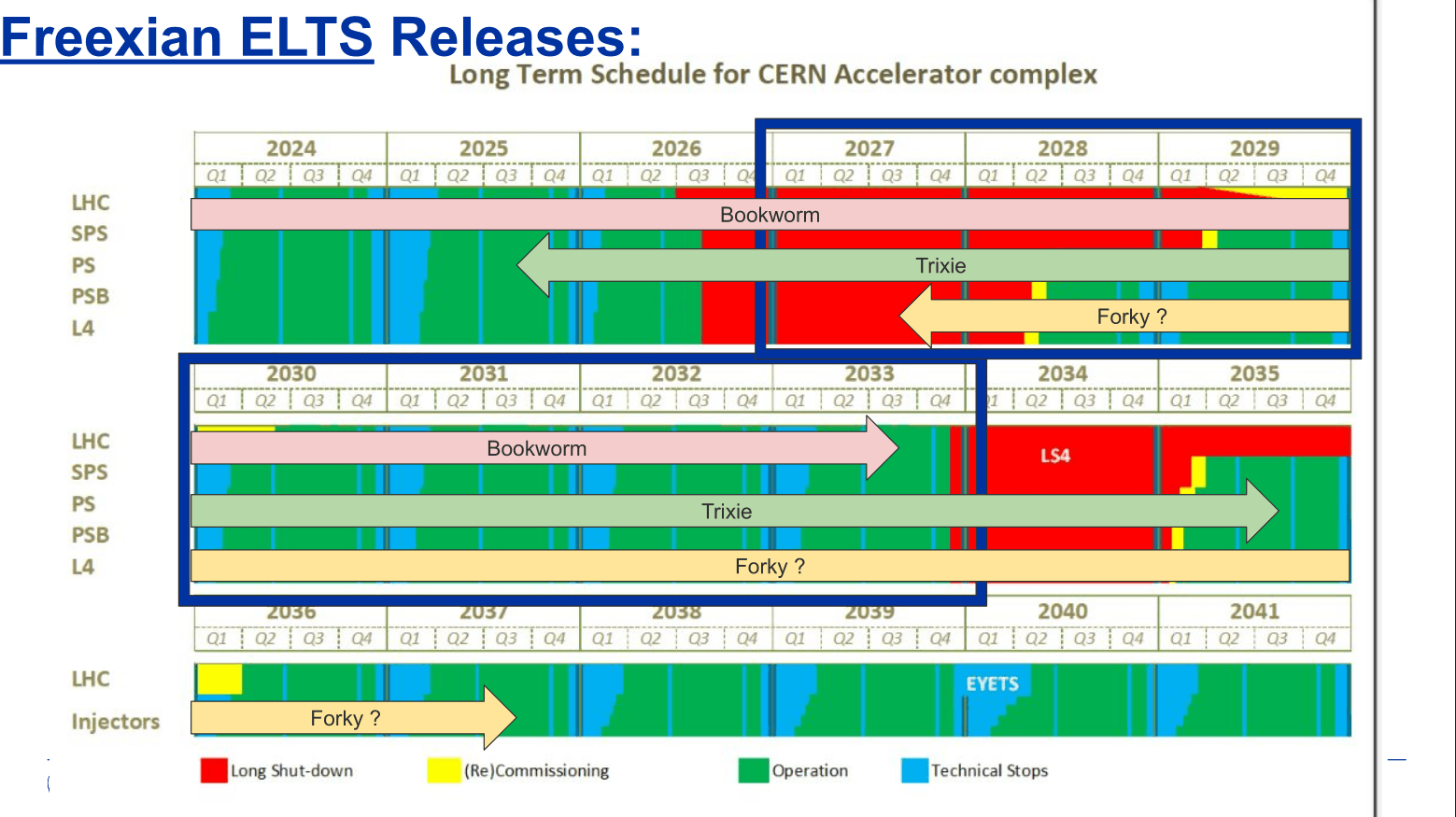
The Debian LTS and Freexian ELTS release strategy paths.
CERN weighed two paths for keeping Debian aligned with its accelerator schedule. Plan A develops on Bookworm through 2026, deploys Trixie as the long-term support release from 2026 to 2030, then moves to Debian 15 "Duke."
Plan B skips that last jump, staying on Trixie under extended long-term support (ELTS) out to 2033 instead. A third option, running Bookworm itself under extended support the whole way, got ruled out.
Either path depends on Debian's LTS and ELTS programs staying healthy, which is part of why CERN has started sponsoring Freexian, the Debian-focused services company behind those support programs.
How it will be built
The old setup ran on NFS and tftpd, a bootserver model that traces back to around 2005.
The new one decouples the bootloader, kernel, init RAM disk, and userspace into separate pieces, then rebuilds delivery around Kubernetes.
A controller compares the configuration CERN wants against what's actually deployed and redeploys automatically when the two fall out of sync, instead of relying on someone pushing files over NFS by hand.
None of this touches CERN's data centers; this is specifically about the machines that keep the accelerator itself running. By the time the last quarter of 2026 closes out, CERN expects to have completed the migration.
Enjoyed this update? Support independent Linux news coverage
It's FOSS has been helping people use Linux for the past 14 years. Help us stay independent from big tech. Become a Plus member, enjoy ad-free reading and get 5 eBooks.