


Big tech companies have a habit of offering something for free, watching the user base grow, and then quietly walking it back once people are too invested to leave easily. A bait-and-switch, so to speak.
Redis did exactly this back in March 2024, dropping its long-standing BSD license for the more restrictive dual licensing model, and the blowback was severe enough that the community forked it into Valkey almost immediately.
Linux tends to get hit hardest by these moves. Its comparatively smaller user base means less commercial pressure, making it an easy target to throw under the bus whenever companies feel like cutting costs or boosting profits.
One such case has now surfaced that will make you wonder if this particular company's decision was really shortsighted or is just a cash grab.
It doesn't make sense!
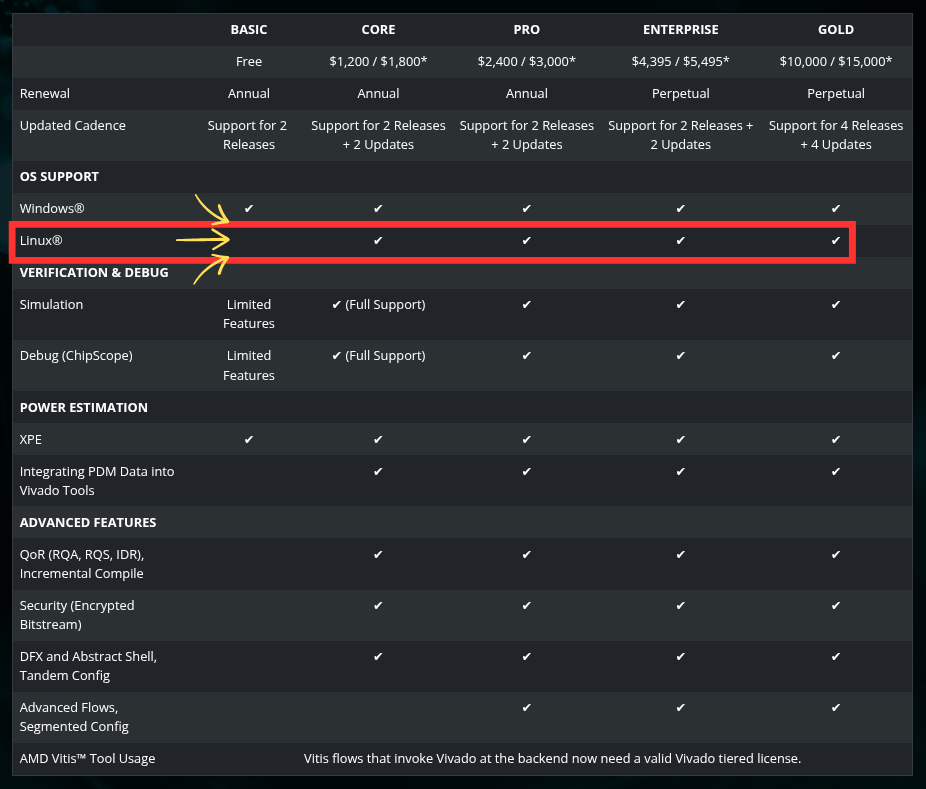
Vivado is AMD's design suite for its FPGAs and adaptive SoCs. It is what engineers, students, and hardware hobbyists use to write, synthesize, and test their FPGA designs. Until now, it has been available for free on both Windows and Linux under what AMD called the Standard Edition.
Starting with the 2026.1 release, AMD is switching to a tiered licensing model. The free Basic tier covers entry-level devices but is restricted to Windows only. Linux support does not show up until the "Core" tier, which costs somewhere between $1,200-$1,800 per year.
AMD framed all of this on its download page as a move toward more flexible licensing. On its dedicated licensing options page, the company told free-tier users the only thing changing was a simple annual license renewal.
That's not all. 🤷
When users went to AMD's support forum asking for an explanation, forum moderator Anatoli Curran showed up in the thread. His first order of business was to warn people about "bad language or abusive behaviour towards AMD," before getting around to addressing anything of substance.
When pushed for a real answer, Anatoli pointed unhappy users toward Vivado 2025.2, suggesting they simply stick with it if they did not want to pay. He did mention that 2025.2 loses official support once Vivado 2026.3 ships, but that detail was buried in a thread reply, leaving users with little more than a dead-end recommendation.
Anatoli also started putting out numbers, claiming that 70% of their customers still use Windows. As expected, someone cross-questioned him, asking if much of their users were on Windows, then why was Linux support being locked away behind a paywall.
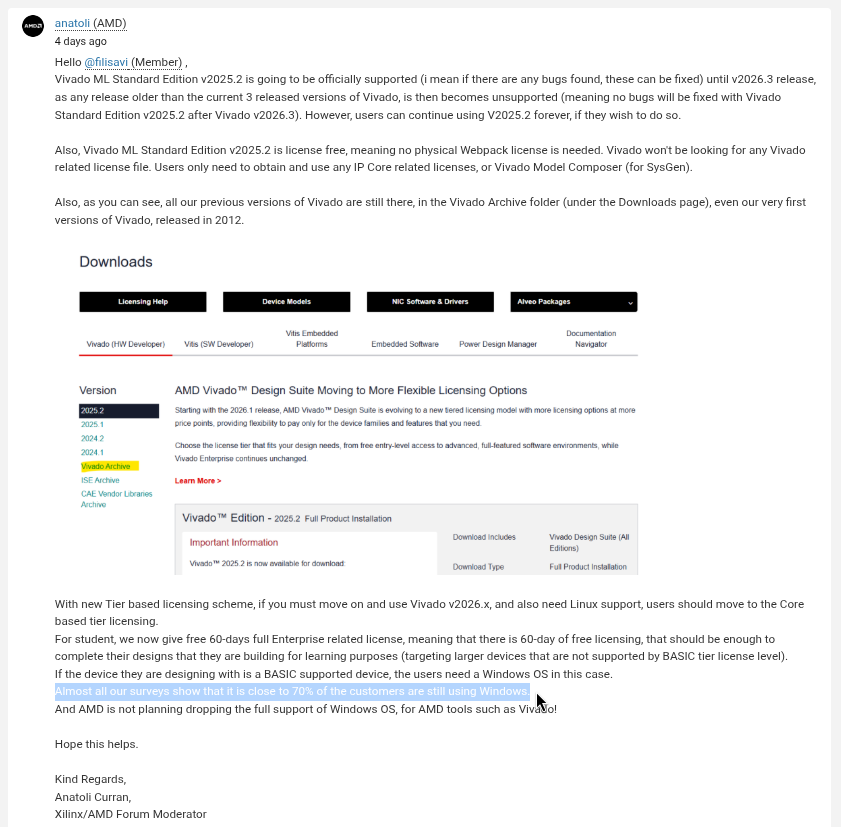
To which he replied in a very PR-coded manner, completely disregarding what was brought up:
From Core and higher tiers, both Windows and Linux are supported platforms.
As stated already, AMD expectation is that the BASIC tier is used for simple, entry‑level needs. While more advanced, production workflows are aligned with paid tiers. These tiers are specifically designed to deliver the full flexibility and capabilities needed for serious development.
Hence, all paid tier levels have options of both Windows and Linux platform usage. Only BASIC tier limited to Windows ONLY platform support.
That really doesn't instill one bit of clarity and shows how apathetic tech giants like AMD can sometimes get. The conversation in the thread then continued along the lines of how Xilinx, and later, AMD, had gained the trust of Linux users by keeping an open outlook towards the community.
But pulling off such a thing without considering how people benefited from having Vivado on Linux tells you a lot about what this company actually thinks of its non-enterprise user base.
Students, hardware tinkerers, and academic researchers who have relied on a native Linux workflow are now left hanging. Keep in mind that many of those people eventually end up in engineering and procurement roles where they have real influence over hardware-related decisions.
What now?
As of writing this, AMD hadn't put out a statement regarding this, and the stonewalling has continued. Of course, more and more people are getting to know about this. It is just a matter of time before someone at PR has to do something about this.
Plus, with the kind of flak they have been getting over some of their most bizarre choices lately, I would handle this now instead of later.
Until then, you can participate in the conversation either on the main thread where this shady behavior was first reported, or you could head over to Hacker News and join the others in calling out AMD.
Suggested Read 📖: Bambu Lab Has Been Violating AGPLv3
 Sourav Rudra
Enjoyed this update? Support independent Linux news coverage
It's FOSS has been helping people use Linux for the past 14 years. Help us stay independent from big tech. Become a Plus member, enjoy ad-free reading and get 5 eBooks.