


I own a Flipper Zero. It's a fun little device for anyone with a hacker mindset, the kind of gadget you poke at NFC tags, IR remotes and Sub-GHz signals with just to see what happens.
So when Flipper Devices first showed off the Flipper One, I expected it to be just a spec bump. It isn't one.
As we noted when the Flipper One was first announced, this is a pocket-sized Linux computer that also happens to be a serious network tool. In short, it's a lot more capable device than its predecessor.
And now it's official. The Flipper One Kickstarter campaign is live now, priced at $399. That's double what a Flipper Zero costs, and you can blame the steep increase on the chip shortage in this age of AI.
Key Specifications
- Price: $399 (Kickstarter)
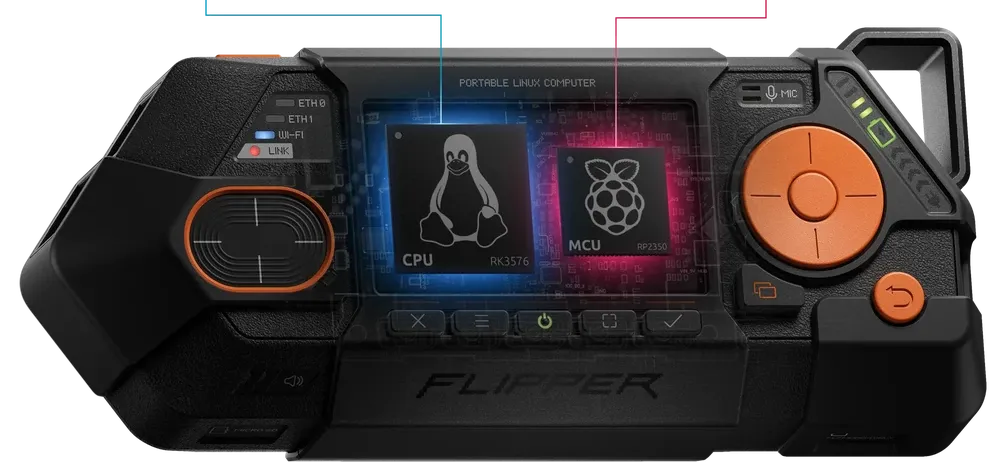
- SoC: Rockchip RK3576 (8 cores) + Raspberry Pi RP2350 co-processor
- Memory/storage: 8 GB LPDDR5 RAM, 64 GB UFS
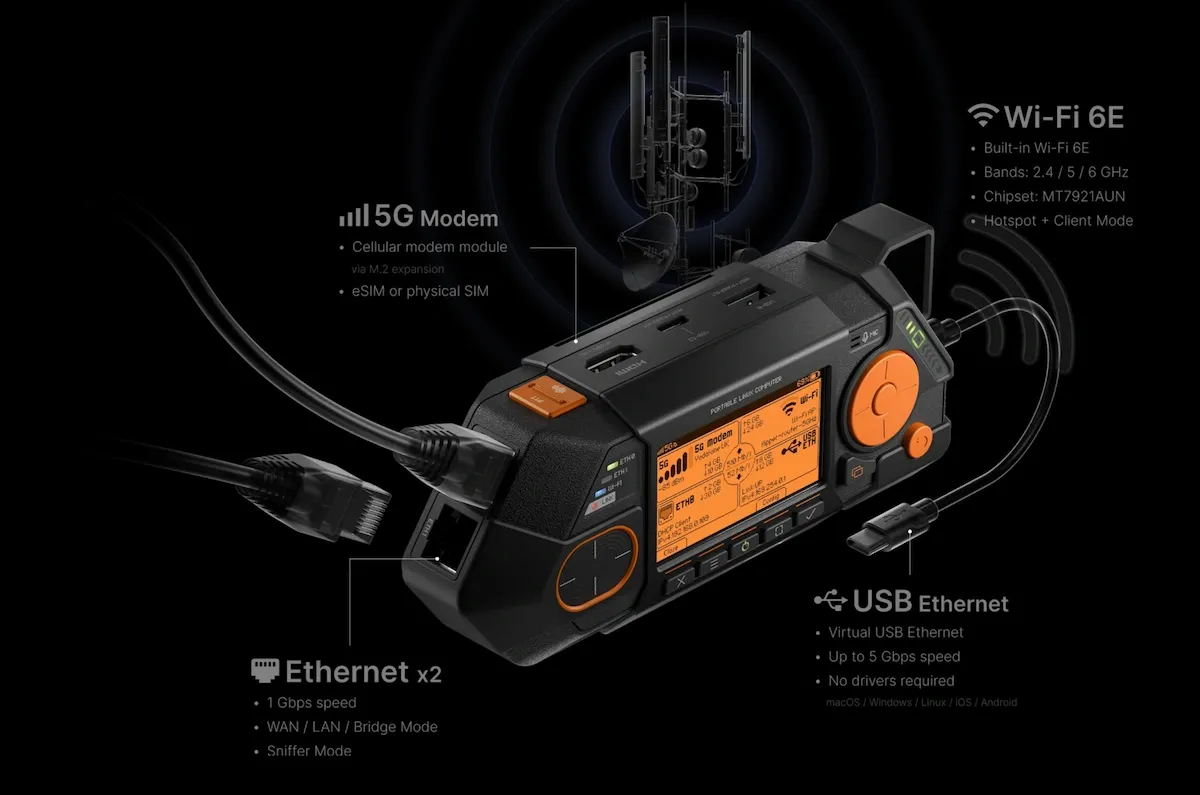
- Connectivity: Wi-Fi 6E, Gigabit Ethernet, built-in eSIM
- Expansion: M.2 and GPIO modules (5G, LoRa, SDR)
- Estimated shipping: July 2027
The Flipper One costs $399 on Kickstarter. Folks who bought the $20 pre-order coupon earlier were promised a $379 price.
Flipper Devices is also clear on the fact that this is not a successor to the Flipper Zero. The Zero works offline, interacting directly with physical stuff like NFC, RFID, infrared and Sub-GHz radio. Flipper One moves up the stack into networked computing: high-speed connectivity, data processing and real on-device compute.
Under the hood, it uses a dual-processor setup. The Rockchip RK3576 octa-core chip runs Linux, networking, USB 3 and video output. A low-power Raspberry Pi RP2350 handles the small 256x144 grayscale display, buttons and power. That means the screen and buttons keep working even when the main Linux OS is not used.
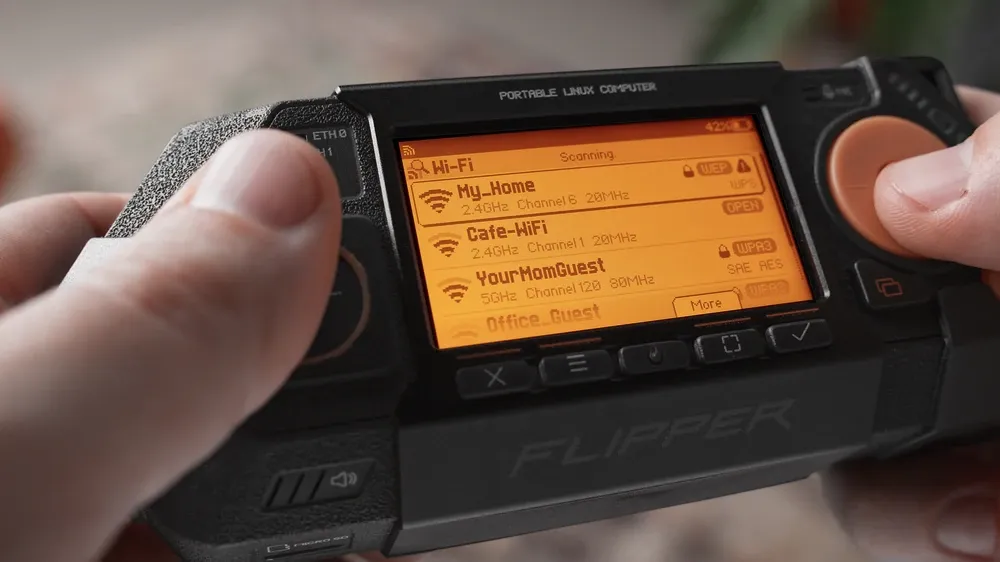
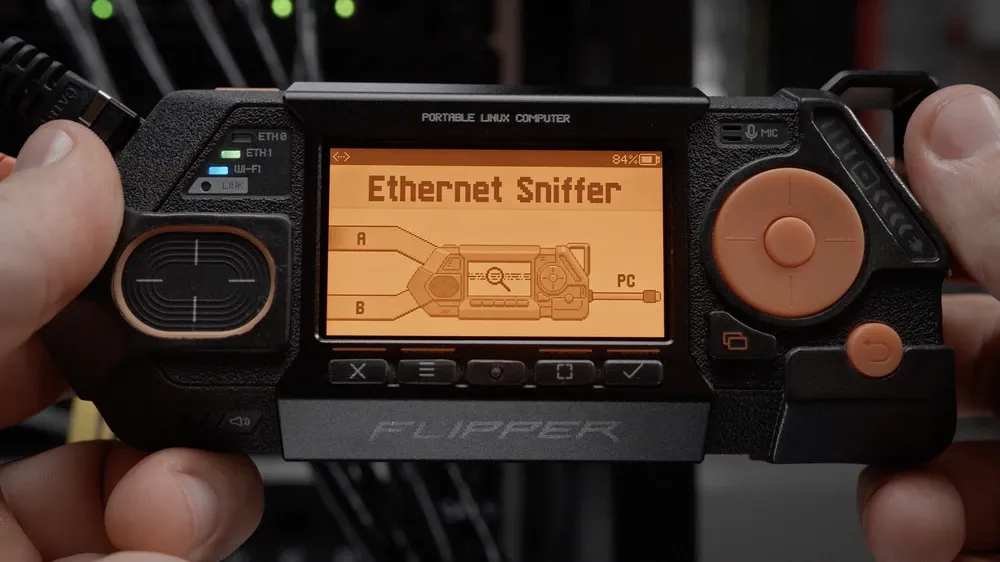
The networking side is where things get interesting. It can juggle up to five uplinks, act as a hotspot, run VPNs and firewalls, scan wired and wireless networks, and analyze Wi-Fi traffic. The built-in eSIM comes with a Flipper SIM data plan.
It also doubles as a battery monitor, keeping tabs on its own power and whatever you plug into it.
Plug it into a monitor over USB-C DisplayPort Alt Mode and it becomes a desktop computer. Or hook it up to a TV and use it as a media box. It is a versatile device.
Flipper OS and the mainline kernel
I like the fact that they have put in effort for a custom OS called Flipper OS, a Debian-based system where you switch between preconfigured profiles for different jobs: network router, radio lab, desktop, TV media box.
Each profile has its own settings, kernel and apps. You pick one from a boot menu before Linux even loads. Your changes live in an overlay layer, so you can wipe a profile back to default if you mess it up. Experiment freely, as they say.
Flipper Devices has also partnered with Collabora to get the RK3576 into the mainline Linux kernel. The device already runs on mainline, and the DisplayPort Alt Mode patches are under review. The goal is an ARM computer with no binary blobs. Anyone who has fought with a vendor BSP on an ARM board will appreciate that.
There's still some work left. The team is working on dynamic memory frequency scaling for better power efficiency, and on removing the few closed-source bits remaining in the boot process. All of this is in public knowledge, available on the Flipper Developer Portal.
$399 price tag with no profit margin!
The global RAM shortage has made memory prices volatile (or should I say hostile). Flipper says RAM and UFS storage now account for more than half of the total hardware cost of the Flipper One.
Instead of waiting or raising the price, they are selling the hardware at cost and betting on the community to fund the first production run. Bold move, or a sign of how bad memory pricing has gotten? Probably both.
The track record helps. Flipper Zero raised $4.8 million on Kickstarter, hit its goal in eight minutes, and the company has sold over a million devices since 2020.
Pre-order is open now
The Flipper One Kickstarter campaign runs from November 17 to December 17, 2026. You can back the campaign on Kickstarter.
The device costs $399, and the box includes the Flipper One and a USB-C cable. Estimated shipping is July 2027.
As with any crowdfunding campaign, treat the timeline as an estimate. Back it because you want to support the project, not because you're counting on the ship date.
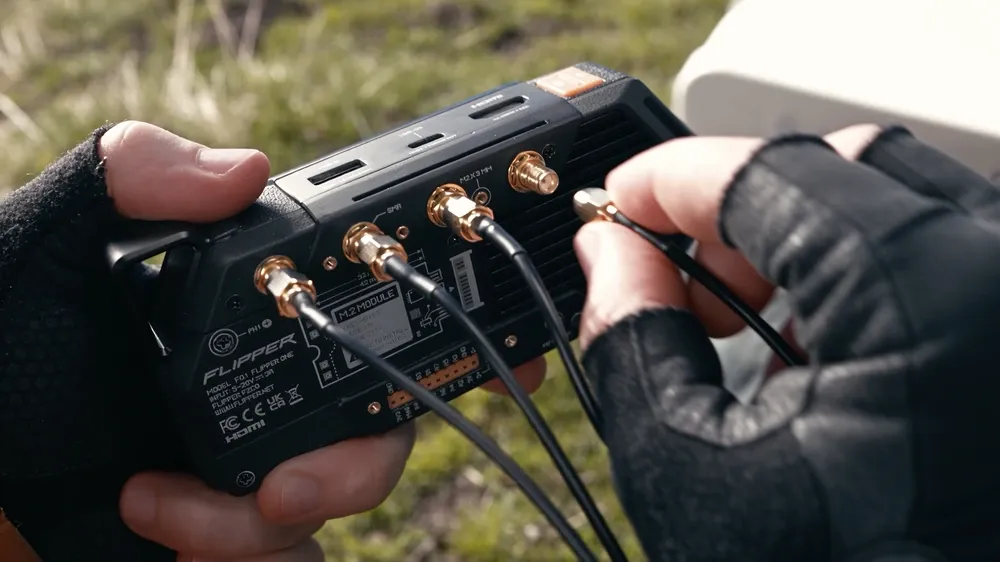
Three expansion modules are also available through the campaign:
- LoRa module: works with Meshtastic, MeshCore and Reticulum mesh networks, and doubles as a walkie-talkie.
- 5G modem: an M.2 module that replaces the back cover, with four SMA antenna ports and support for both the built-in eSIM and external SIM cards.
- SDR module: a software-defined radio module, full specs to be announced later.
The modules cost extra.
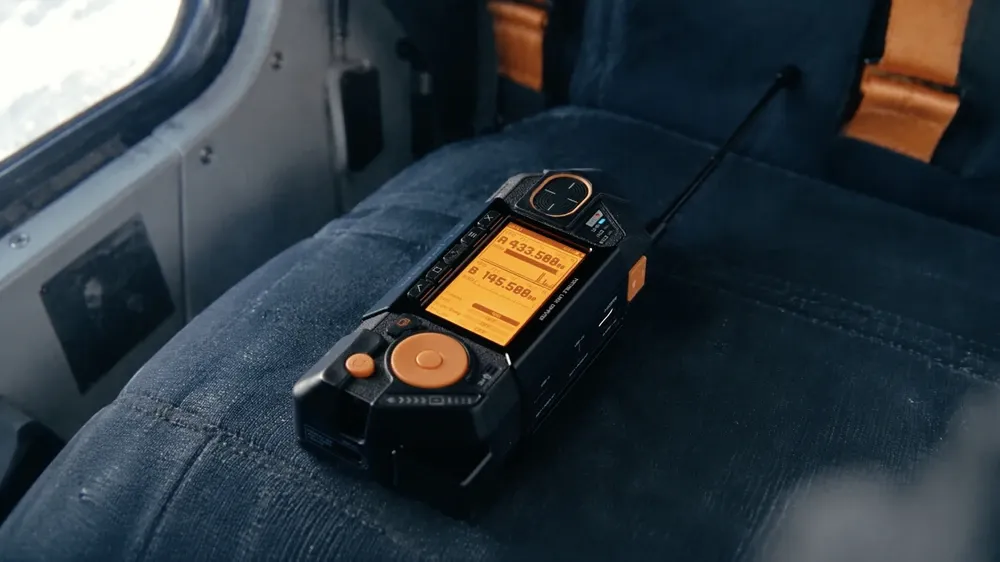
As an owner of Flipper Zero, I am excited for Flipper One launch. In normal times, this would have been a sub $200 device but we live in the times where hobbyist gadgets are getting expensive because Big Tech has disrupted the supply chain for their AI obsession.
Enjoyed this update? Support independent Linux news coverage
It's FOSS has been helping people use Linux for the past 14 years. Help us stay independent from big tech. Become a Plus member, enjoy ad-free reading and get 5 eBooks.
Skip the AI slop and SEO spam in your Google results
Tell Google you prefer It's FOSS, and it will show our Linux news and tutorials, created by experienced Linux users, more often when you search. It takes just a click.
Set as preferred sourceGet FOSS Weekly in your inbox