


If you've followed security news this year, you know the number of reported vulnerabilities has gone up sharply. AI-assisted bug hunting means flaws are being found faster than maintainers can patch them, and every distro is feeling the pressure.
Canonical's answer is to fight fire with fire. They are going to use AI to fix what AI is finding. At the recently concluded Ubuntu Summit 26.10, Canonical introduced Surge, a multi-agent AI system that triages vulnerabilities and writes backported fixes for Ubuntu packages.
Don't worry. None of this goes into your regular Ubuntu security updates automatically. Surge's fixes go to a new opt-in repository called the Edge archive, and only reach the normal updates after human-led testing.
The CVE problem Canonical is trying to solve
The announcement came in the security segment of the Summit's opening remarks, presented by Pierre Guillemin, VP Engineering.
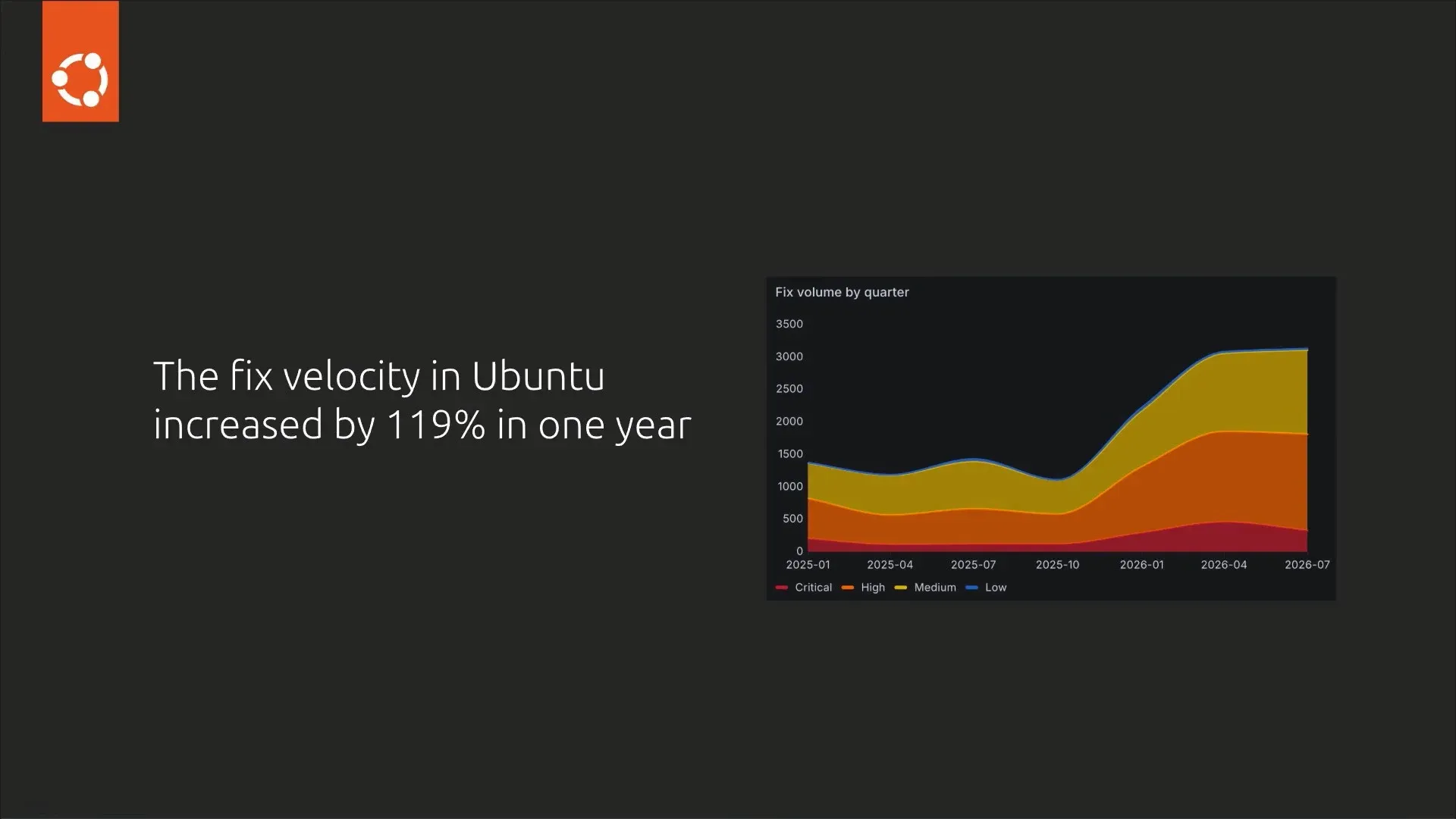
He started with numbers. According to the slides, the "fix velocity" in Ubuntu increased by 119% in one year. The "fix volume by quarter" chart shows roughly 1,400 fixes in early 2025 and about 3,100 a quarter by mid-2026.
That's not it. Canonical says October 2026 alone had almost as many CVEs as all of 2025.
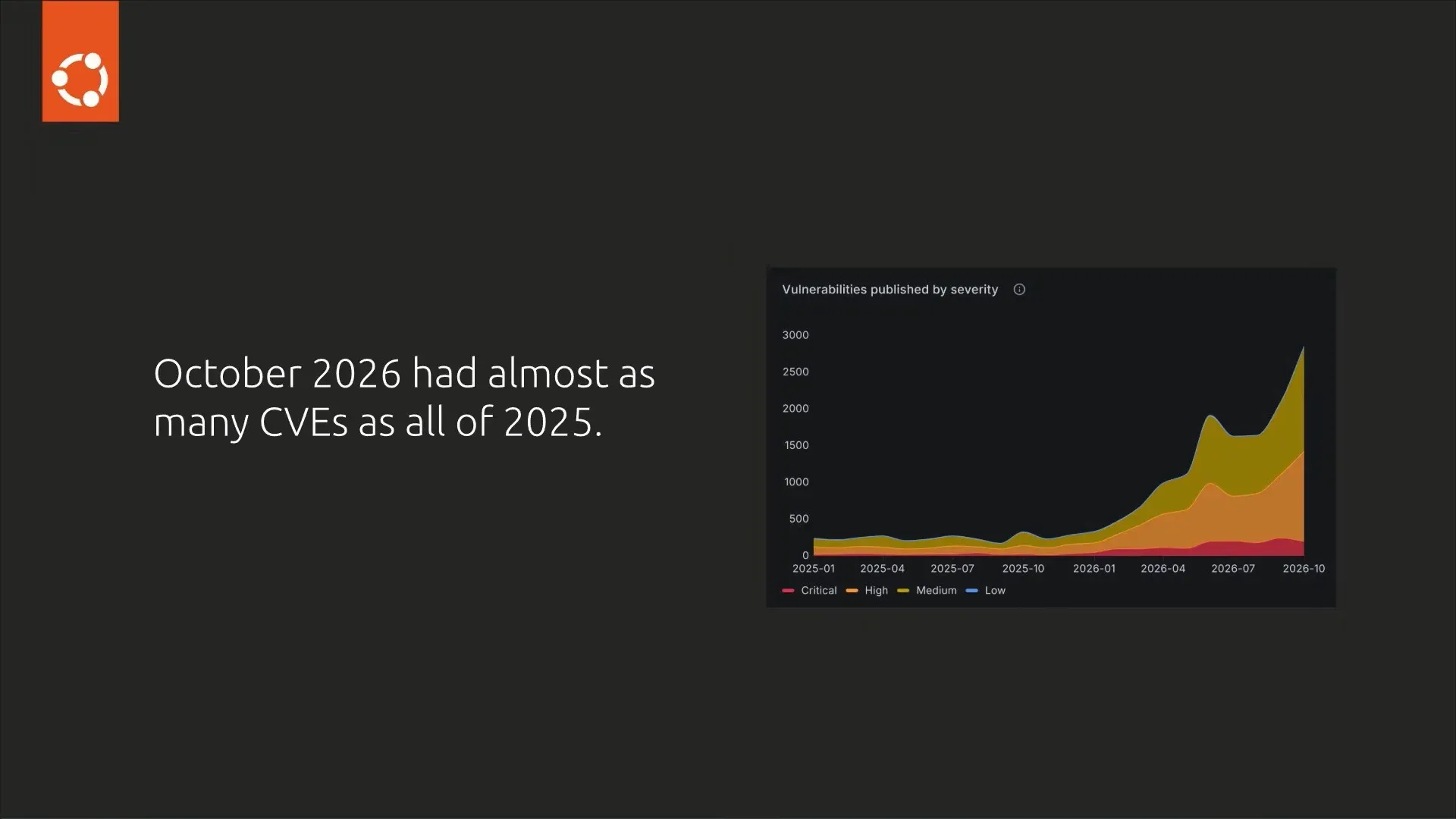
And Canonical doesn't expect this to slow down. Guillemin said the company expects 2027 to bring "another order of magnitude growth" in CVEs.
How do you keep up with this pace while sticking to the review and testing standards that stable Ubuntu releases are known for? Hiring and working harder cannot practically compete with this pace.
Meet Surge
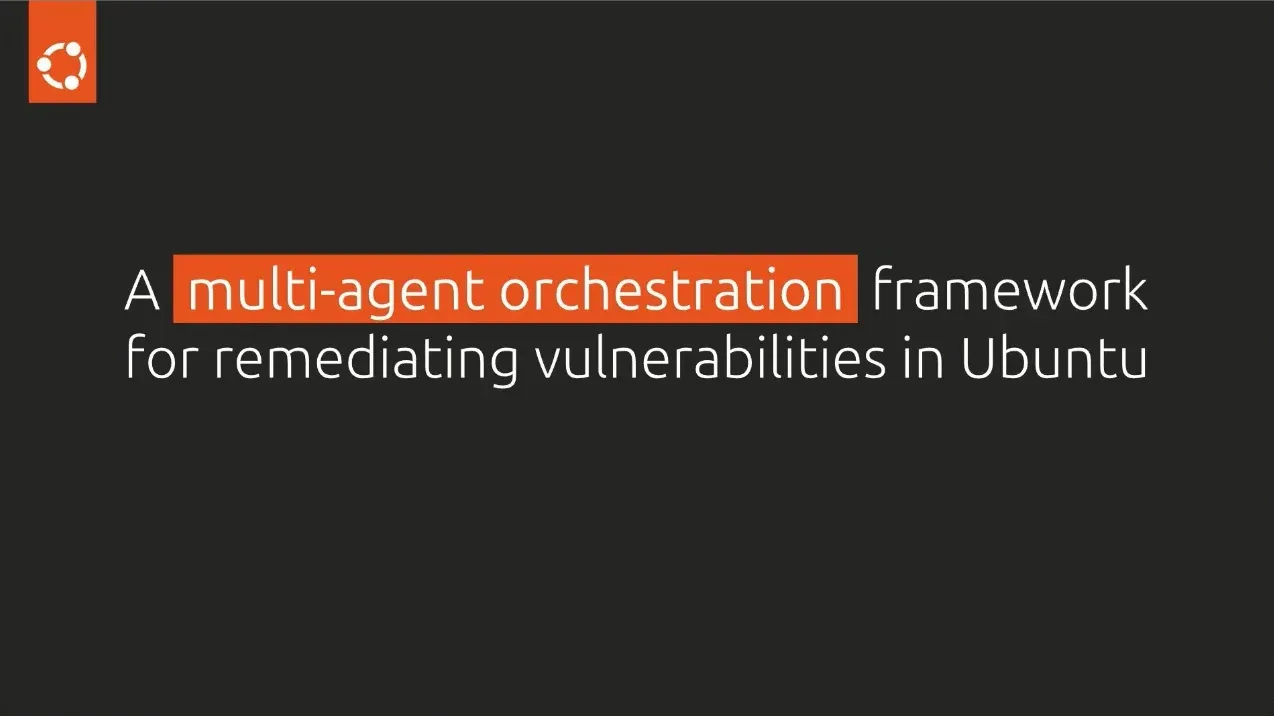
Surge is "a multi-agent orchestration framework for remediating vulnerabilities in Ubuntu."
In simpler words, it's a pipeline where several specialised AI agents handle different steps of fixing a CVE, from finding out whether Ubuntu is affected to producing a patch.
Guillemin says it builds on Canonical's 20+ years of Ubuntu security work. The stated goal is to absorb a big influx of CVEs without creating backlogs. Or, as he put it, "fight AI with AI."
Surge only covers Ubuntu userspace packages, meaning the applications and libraries in the archive. Kernel CVEs are not part of it, as kernel fixes need a different backporting approach and follow their own release cycle.
How does Surge work?
The pipeline has six stages, and the interesting part is that it doesn't trust a single AI model.
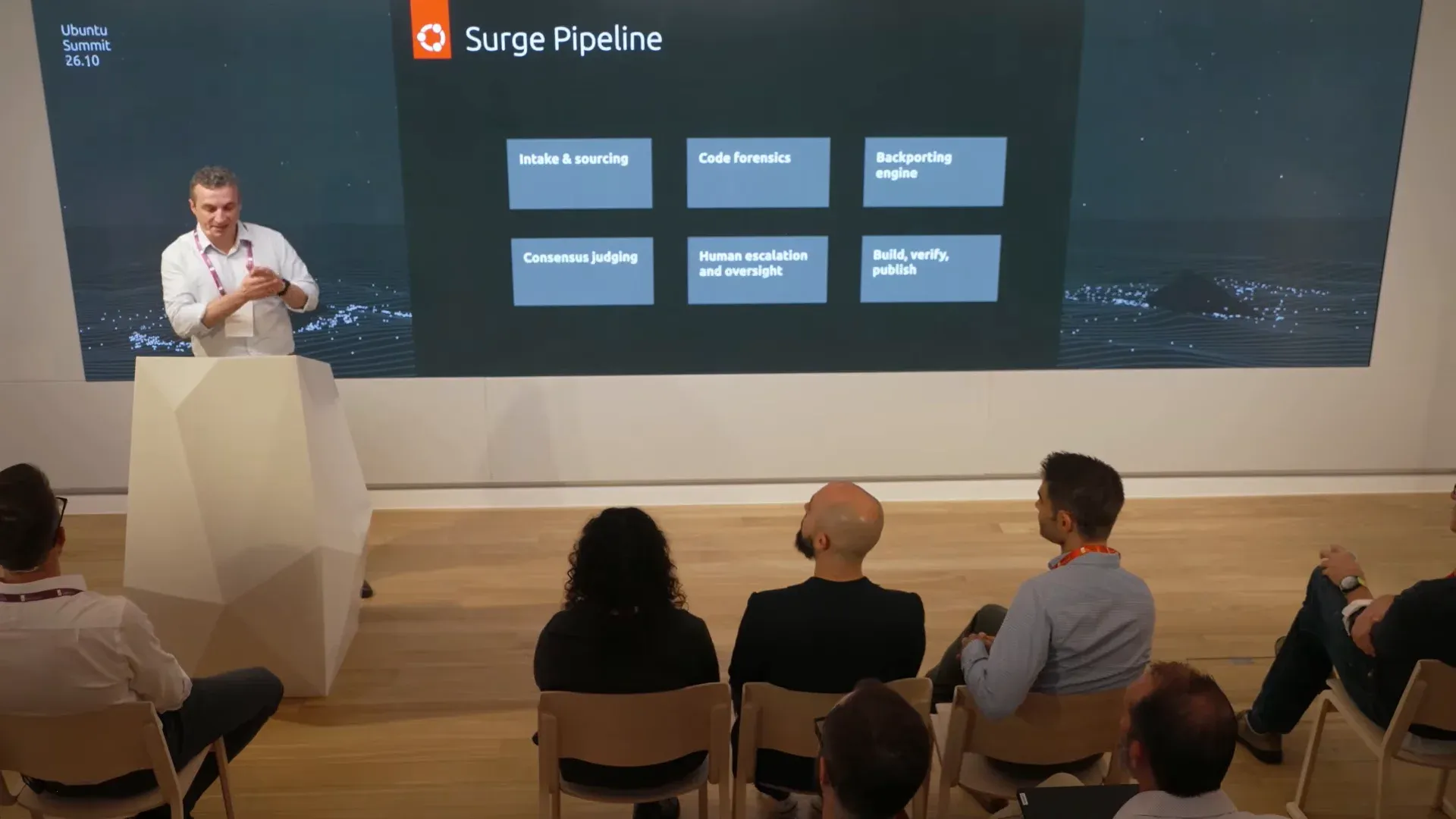
It starts with intake and sourcing, which takes in vulnerability reports, maps them to packages, and checks whether the affected package is in Ubuntu at all. Then code forensics fetches the upstream patch, analyses the source, and tries to reproduce the vulnerability to confirm Ubuntu's version is actually affected.
In the backporting engine, instead of one model writing the patch, several competing models each produce a candidate fix.
These candidates then go to consensus judging, where a separate panel of "judge" models evaluates them and has to agree on the right patch. If confidence is low or the judges deadlock, the case goes to human escalation, where Ubuntu security engineers review it manually.
Finally, the patch goes through the same build, verify and publish process as any other Ubuntu package, including deterministic tests, before it is published.
The Edge archive: AI fixes, but only if you ask for them
Surge-generated fixes are not pushed to your system through the usual security updates. Instead, Canonical is launching the Edge archive, an opt-in preview of fixes that are still in development.
Edge gives you machine-generated patches before they've gone through Canonical's full qualification for general availability (GA). So you get fixes at "machine speed," but with the compromise on the fact they haven't had the full testing yet.
Canonical stresses that this is not a change in its security policy. It "will not automatically upload Surge-generated fixes to our stable releases." Your regular security updates stay human-validated and keep coming through the usual channels.
Will you opt-in?
If you're a regular Ubuntu desktop or server user, nothing changes unless you choose to. Your security updates continue to arrive the way they always have.
If you want to try it, Edge is available through Ubuntu Pro, which remains free for personal use. Canonical has published a guide on how to enable the Edge archive.
I wouldn't put Edge on a production server, yet. But on a regular desktop machine or a homelab, it's a good way to help Canonical find problems early.
To be honest, the idea of AI writing security patches will make some of you uneasy, and that's fair. But we have to "fight AI with AI" because CVEs are not going to stop or reduced. Am I right?
Enjoyed this update? Support independent Linux news coverage
It's FOSS has been helping people use Linux for the past 14 years. Help us stay independent from big tech. Become a Plus member, enjoy ad-free reading and get 5 eBooks.
Skip the AI slop and SEO spam in your Google results
Tell Google you prefer It's FOSS, and it will show our Linux news and tutorials, created by experienced Linux users, more often when you search. It takes just a click.
Set as preferred sourceGet FOSS Weekly in your inbox