


For a long time, running AI locally felt like a weekend project. But things are getting serious. Local AI projects are maturing with each release.
llama.cpp, the engine under almost everything local, finally hit version 1.0. LocalAI shipped a release that wants to do actual office work. Even the new tools look like proper apps rather than early demos.
Local AI is growing up. Let's see what that looks like.
🎓 The grown-up releases
llama.cpp 1.0 arrived a few days ago. After years of build numbers in the thousands, it finally has a proper version. It's a cleanup release too, with 36 deprecated API functions removed.
There are new features as well. You can now store the KV cache in "FP8" with -ctk f8_e4m3 -ctv f8_e4m3, which saves memory on long chats. MoE models get a host memory cache for experts, so big mixture of experts models behave better when they don't fully fit in VRAM.
LocalAI 5.0 also came out a few days ago and its pitch is that you can "give real work to a model you run yourself." Well, every AI tool wants to do real work these than just being your chat partner.
 Ettore Di Giacinto

🖥 On my desk
Last week was all about dictation, and I'm still on it. Right now I'm testing Quoth, an offline voice dictation app for Linux. You press a shortcut, speak, and the text gets pasted into whatever app you're using. It's basically Wispr Flow without your voice leaving your computer. Stay tuned for a full hands-on review video.
🔍 Discover AI tools
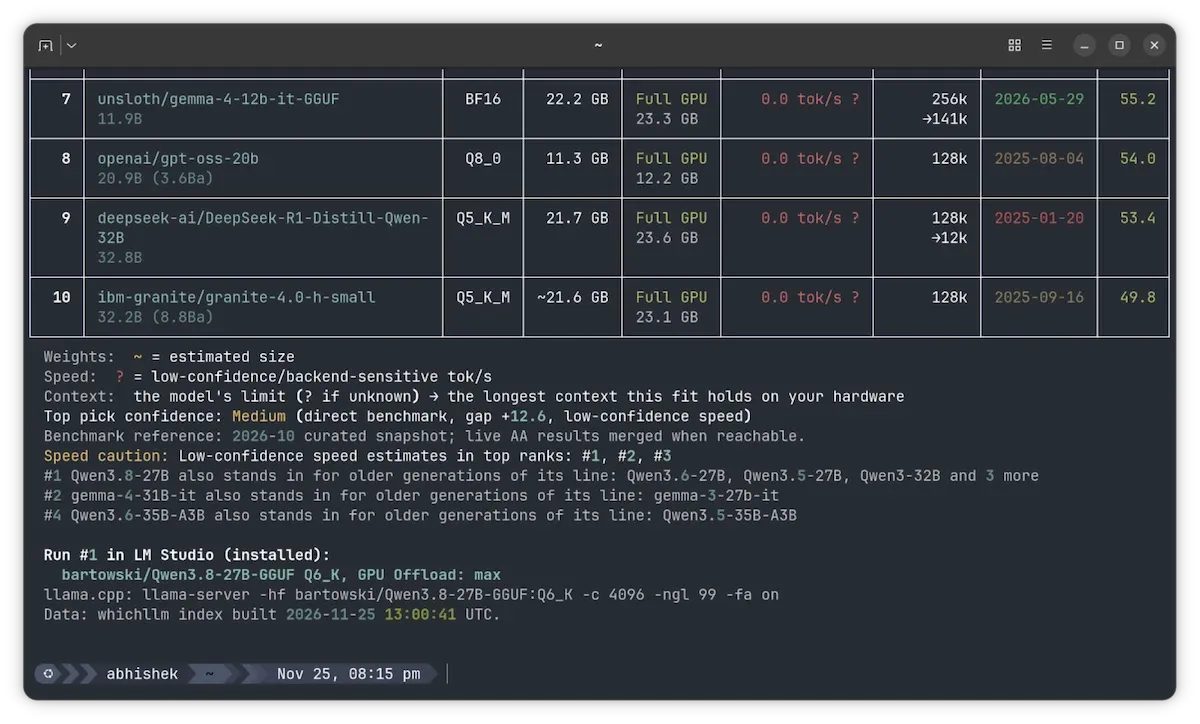
whichllm answers the question every local AI beginner asks: what can my machine run? It reads your GPU, RAM and memory bandwidth, estimates which open models fit and how fast they'll be, then ranks them by benchmark scores.
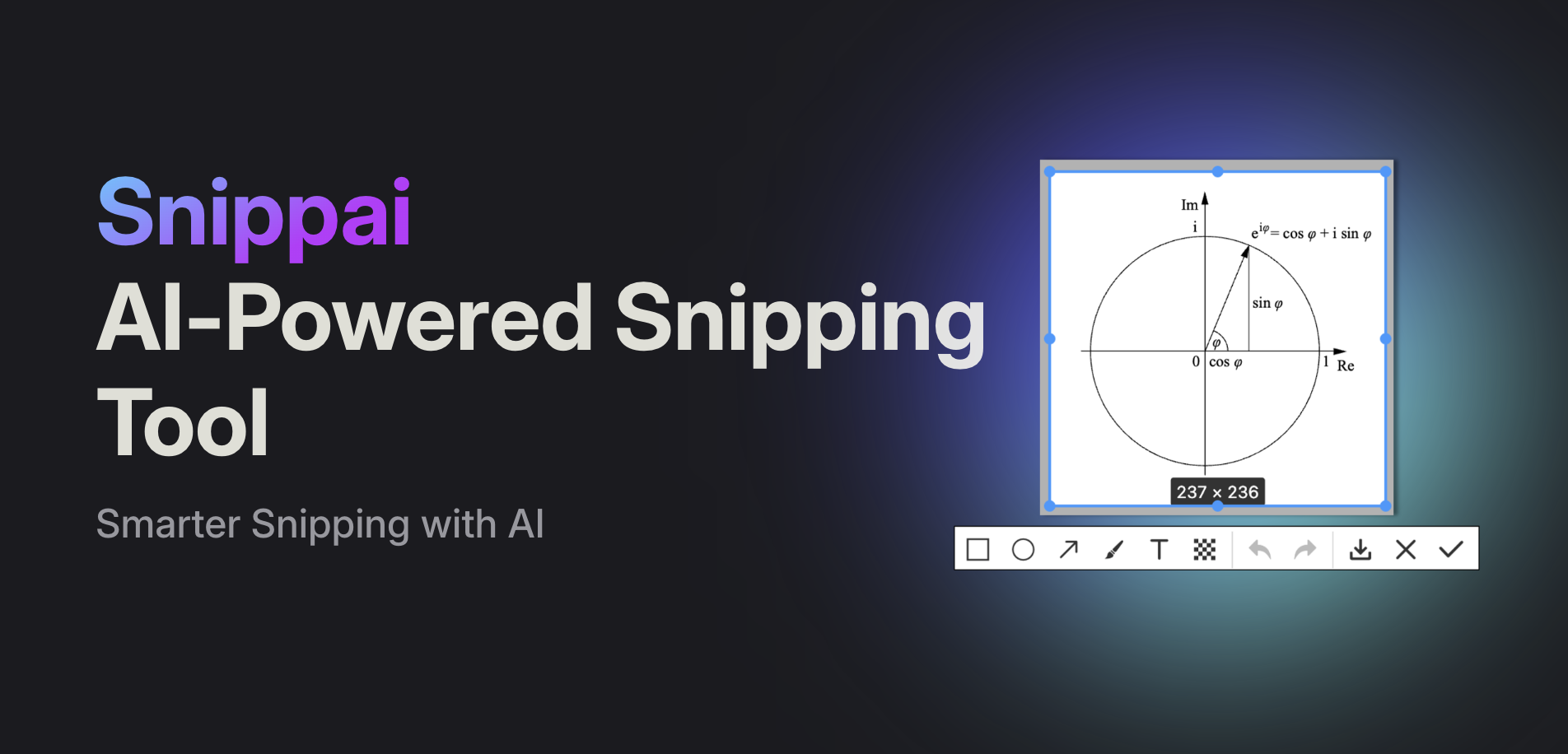
Next on my test list is Snippai, an AGPL-licensed snipping tool. You grab a part of your screen and it turns formulas into LaTeX, tables into Markdown, or explains the code in a screenshot. Basically, a local AI-based OCR tool. I will share how it performs next week.

🗂 AI jargon: FP8
You came across FP8 in this newsletter already, so I thought of explaining the term.
FP8 is an 8-bit floating point number format. Most models store numbers in 16 bits (FP16 or BF16), so FP8 uses half the memory for the same data.
Of course, there is a trade-off for this and that trade-off is precision, since fewer bits means rougher numbers. For things like the KV cache, the "short-term memory" of a chat, the quality loss is usually small and the memory savings are big. That's why llama.cpp 1.0 adding FP8 KV caches matters on consumer GPUs.
⚡ Quick Tip
Not sure which model to pull next? If you have uv installed, you can run whichllm without installing anything:
uvx whichllm@latest
It checks your hardware and gives you a ranked list of models that will actually fit. If your integrated GPU or unified memory gets detected wrong, use --vram to set the limits yourself.
See you next week 🙂
If this helped you, consider supporting It's FOSS
It's FOSS has been helping people use Linux for the past 14 years. Help us stay independent from big tech. Become a Plus member, enjoy ad-free reading and get 5 eBooks.
Skip the AI slop and SEO spam in your Google results
Tell Google you prefer It's FOSS, and it will show our Linux news and tutorials, created by experienced Linux users, more often when you search. It takes just a click.
Set as preferred sourceGet FOSS Weekly in your inbox