


Most of us carry a phone every day, but very few of us could say what's actually going on inside one. That gap is exactly what CircuitMess is trying to fill or should I say, has been trying to fill.
The Croatian company CircuitMess, founded by Albert Gajšak, ran its first MAKERphone campaign back in 2018, a build-it-yourself phone kit that raised over $324,000 and eventually shipped to more than 6,000 people as "Ringo."
Now there's a sequel. MAKERphone 2.0 is live on Kickstarter (partner link) and it has already sailed past its goal with weeks left to go.
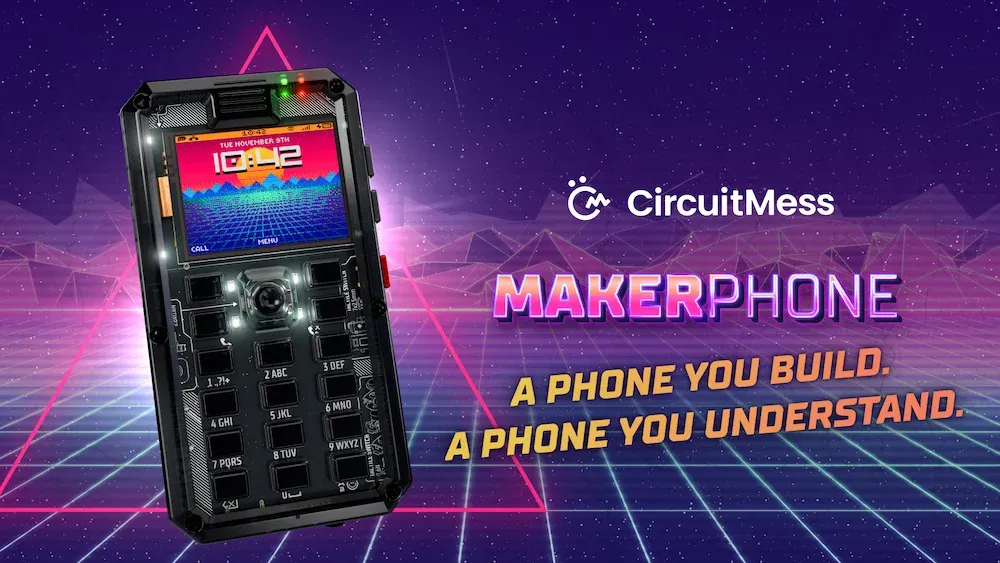
The pitch is the same as before: you assemble a working mobile phone yourself, then learn to code on it. The major difference this time is that you don't need a soldering iron to do it. That's a big relief, for me at least, as I am terrible at soldering.
📝 Key Specifications of MAKERphone 2.0
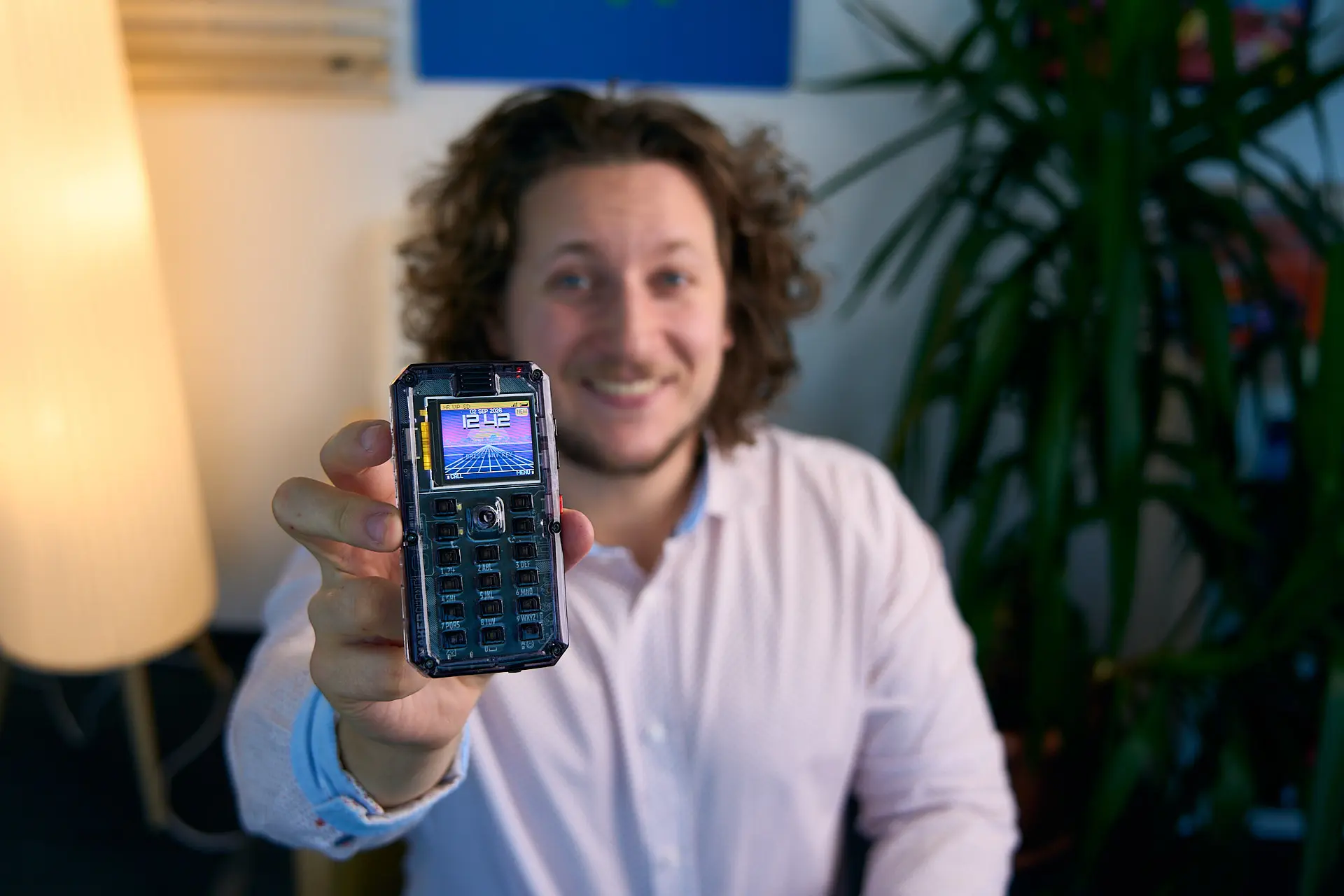
As you can see, the MAKERphone looks like the normal keypad cellphones. Here are the main details:
- Processor: ESP32-S3, dual-core, 4 MB flash, 4 MB PSRAM
- Cellular: 4G LTE Cat-1 with 2G fallback, Nano SIM
- Display: 1.77-inch color, 160×128
- Input: 12-key numpad, nav joystick, 4 function keys, volume keys
- Audio: DAC, speaker, I²S mic, 3.5 mm headphone jack
- Battery: 1000 mAh, USB-C charging
- Storage: microSD slot
- Connectivity: Wi-Fi, Bluetooth, USB
- Expansion: UMAX modular connector
- Assembly: no soldering required this time
- Coding: MicroPython, Arduino C++, VibeBoy (AI-assisted)
- Price: starts at $119 for early backers, $169 otherwise
The kit starts at $119 for super early backers and climbs from there and goes for a retail price of $169.
This is a DIY gadget, the phone that arrives as a box of parts and a build guide, and you put it together into something that makes real calls and sends real texts over 4G LTE. Pop in a SIM and it behaves like an actual phone.
Now 4G seems like a step down from the usual 5G but the device is not supposed to replace your smartphone. If you are not going to use all those internet connected social media and apps, you don't really need 5G. I explain the concept later.
At the core, there is ESP32-S3, the same family of low-power microcontroller you'll find in countless hobbyist boards. So no, this is not going to compare or compete with Snapdragon or Apple Bionic chip and they don't even pretend to do so.
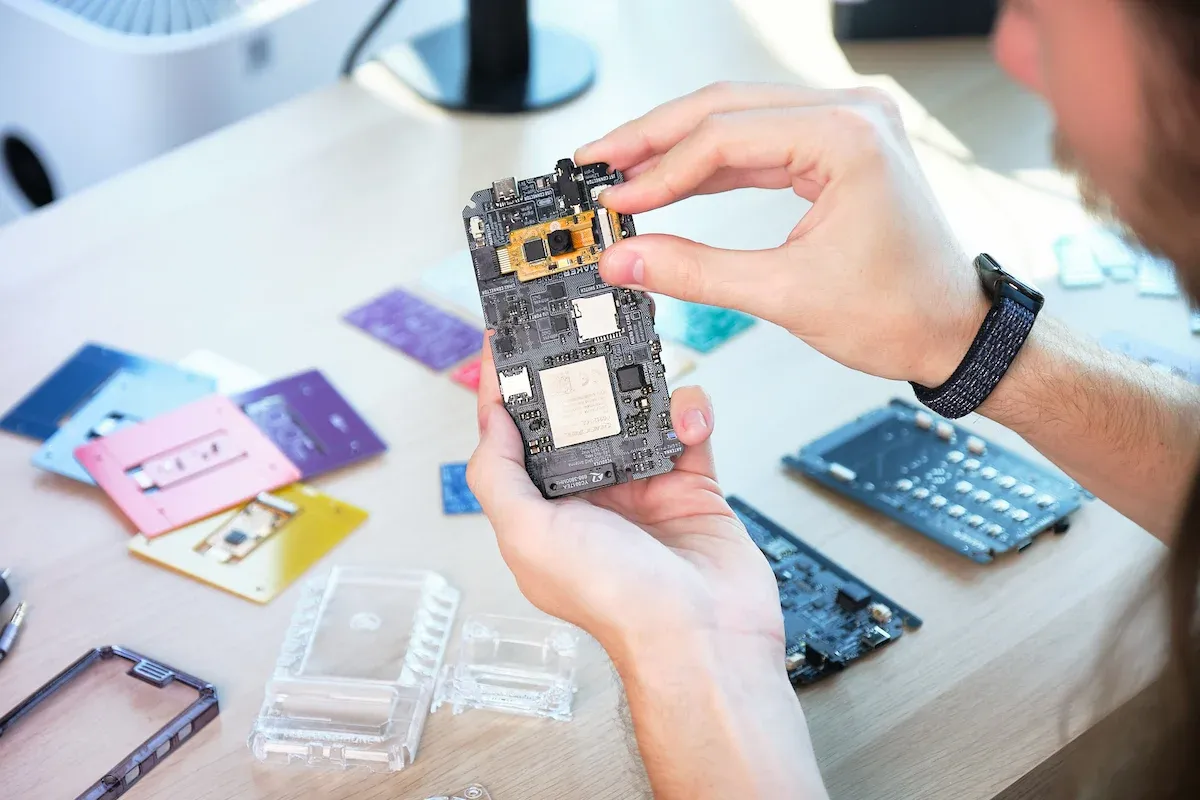
The original MAKERphone asked you to solder the whole board together. Version 2.0 drops that requirement, which lowers the barrier a lot if you've never touched an soldering iron. CircuitMess says it's built to be assembled by kids from around 11 up, so a functional adult should manage fine.
From the official assembly video, it seems like just putting the pieces together.
There's a 1.77-inch color display, a headphone jack (yes, in 2026), and a modular design that lets you bolt on extra hardware. More on that below.
Modules, coding, and a smart band
The part that makes this more than a nostalgia kit is the module system. MAKERphone 2.0 takes add-on modules that change what the phone can do. Several of these modules come in the box.
There's an infrared module for controlling an old TV, a camera module, a 2W speaker, an LED module, and a temperature and humidity sensor. There's also a perfboard so you can wire in your own sensors.
Once it's built, you code it. You can write for it in MicroPython or Arduino C++. CircuitMess is also pushing an AI-assisted coding tool it calls VibeBoy, so the "vibe coding" fad has officially reached the DIY phone aisle.
And that's not a bad thing entirely. Not everyone can code or make a custom app in MicroPython. But LLMs have removed that barrier. You have the hardware; you use a LLM and let it generate the kind of software you want. That's the reason that Seeed Studio and many other hobbyist hardware makers are promoting their own AI-assisted platforms. It makes hardware more enjoyable for bigger group of people.
CircuitMess is selling a companion too: a programmable smart band that pairs with the phone over Bluetooth. Think of it as a semi-smartwatch as it can show you time, let you play games and use timer and stopwatch functionality. There are no sensors here to track your health and activities, as far as I can see.
It's a separate accessory rather than part of the base kit, so treat it as an add-on if the idea appeals.
The idea behind this DIY phone
A 4G phone seems like an outdated device in 2026. After all, 5G is everywhere and even the most basic smartphones support 5G these days. But the premise of MAKERphone is entirely different. It's not a smartphone by choice.
We have seen such devices in the 'maker space' in the past. There is Flipper Zero that has an entire different purpose, then there are handheld retro gaming devices, pocket computers, etc.
This is a similar idea where kids in STEM or hobbyist adults can build the device as per the liking, by adding the desired modules.
To give it more functionality, there is the scope of a 4G sim card. This gives you the ability to make calls and text messages.
With that, it becomes a bar phone that you assemble and design new games and apps for your own self.
And the device is still useful as a phone. If you want kids to stay connected with you, not the social media, it works. The same goes for adults who deliberately want to stay away from the internet (except when using a proper computer).
🛒 Pricing and Availability
MAKERphone 2.0 is live on Kickstarter now and has already hit roughly 790% of its funding goal, with about 27 days left on the campaign as of writing.
Pricing starts at $199 for the early bird tier, with higher tiers as the discounts sell out. There are way too many tiers to fit in all here.
US, EU, UK and Canada residents do not need to pay any import fee. VAT is likely to be extera depending upon your location. Shipping cost are not clear to me but the device should start shipping in July-August 2027.
If you just want an inexpensive (smart)phone, this isn't the device for you. If you want to understand phones, or hand a kid something that turns screen time into build time, and the budget and wait time is okay for you, you can make a purchase.
Enjoyed this update? Support independent Linux news coverage
It's FOSS has been helping people use Linux for the past 14 years. Help us stay independent from big tech. Become a Plus member, enjoy ad-free reading and get 5 eBooks.
Skip the AI slop and SEO spam in your Google results
Tell Google you prefer It's FOSS, and it will show our Linux news and tutorials, created by experienced Linux users, more often when you search. It takes just a click.
Set as preferred sourceGet FOSS Weekly in your inbox