


Over the years, we have watched countless Linux distributions come and go, and it usually ends with maintainers running short, a project leader retiring, or a lack of traction.
Now, in this AI-fueled era, we are seeing many new distros pop up, and while some of them seem to be trying something different, others are just trying to be macOS clones.
That is why I am excited to see Slax return after years without a release and take on what is expected of a modern Linux distro in 2026. It is a portable distro you run from a USB stick, btw.
A comeback we didn't see coming
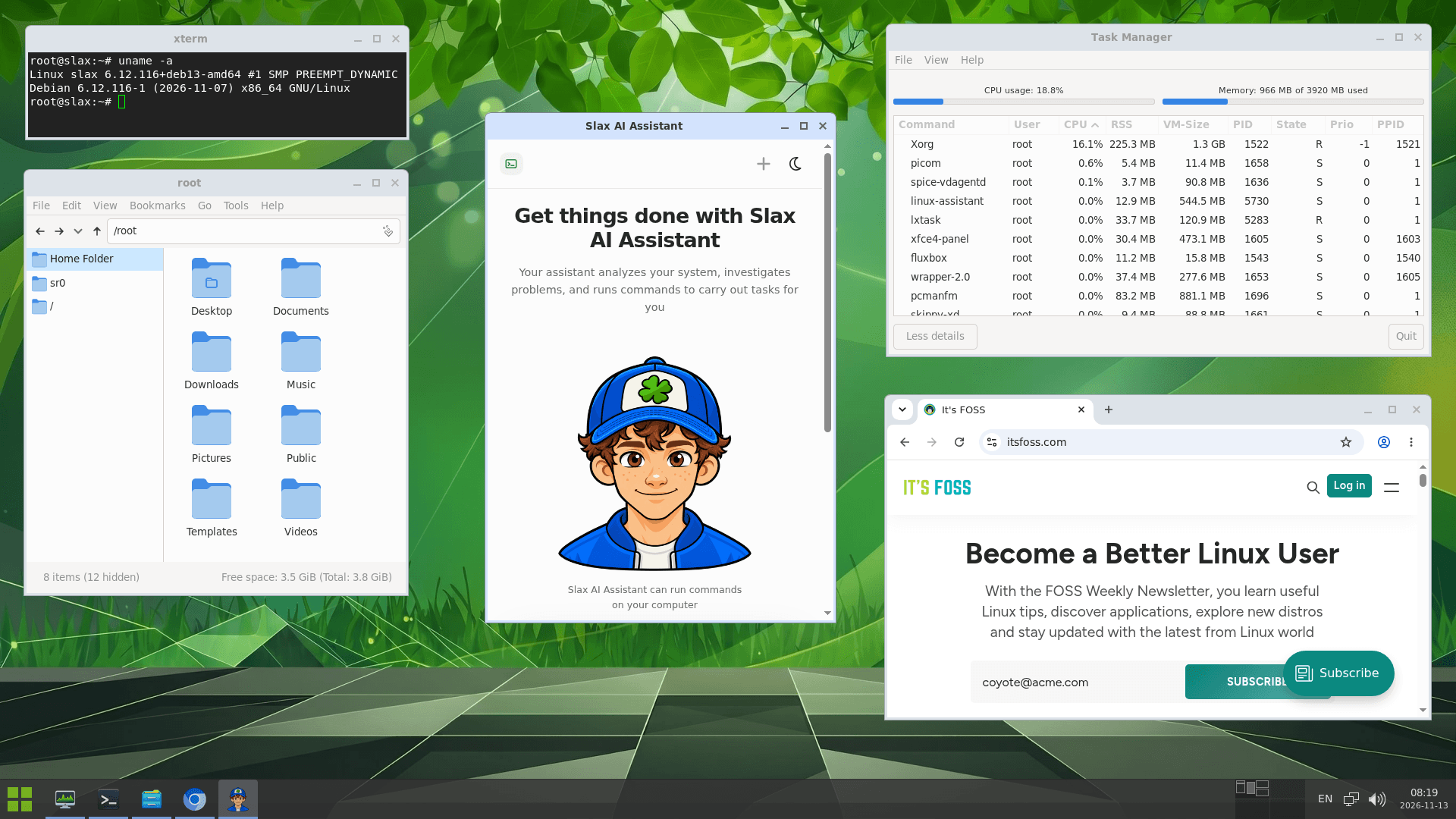
The Slax 2026.11 release is based on Debian "Trixie," and is powered by Linux 6.12, an older kernel release that is one of the current long-term support offerings maintained until December 2028.
The previous release came way back in October 2023, where it shipped with two bases, Debian 12.1 and Slackware 15.0.2-current. That's about three years and a month ago, and the recent release post gives no reason for the large gap.
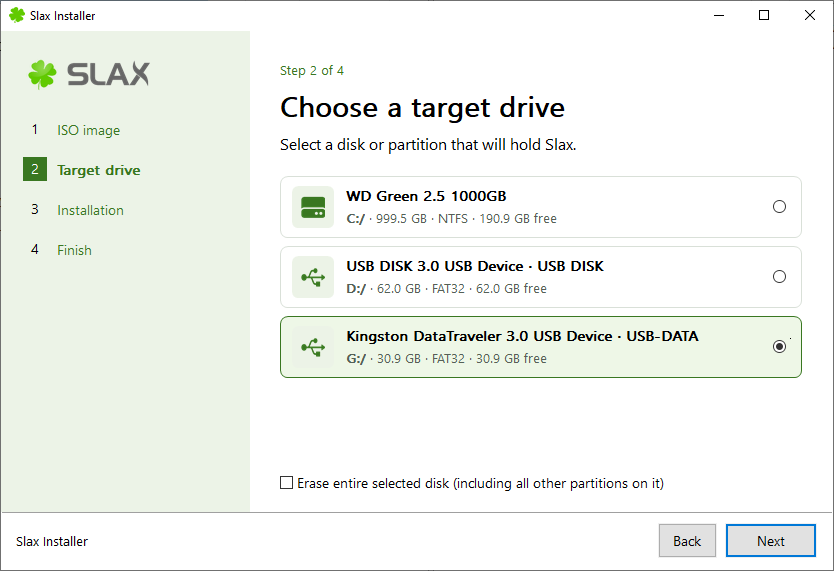
Slax now has a graphical installer for Windows and Linux, where you open the downloaded ISO as a folder, start the installer from there, and pick a drive. It will then create a bootable USB stick or set Slax up alongside an existing system.
Similarly, a single USB stick can hold several named sessions, such as one for work and another for experiments, where you pick one at startup according to the use case.
The Fluxbox desktop now shows window previews when pressing Alt+Tab and on taskbar icons, and Alt+F3 opens all four workspaces at once. For the launcher, Slax can now promptly download any missing apps if you click on the app icons that have a downward-pointing arrow on them.
A signed bootloader and kernel also let Slax start with UEFI Secure Boot enabled on compatible PCs.
The last addition is Slax Assistant, an AI helper that opens from the launcher. You tell it what you want in plain language, and it can then inspect the system, investigate an issue like disk space running out, and execute commands to fix it.
Though you need to be online and signed in to use it, with email, Google, and GitHub as the sign-in options. The whole thing runs on an online Slax service, details for which are slim.
The sign-in screen offers 100 free credits to try it out, and Slax does not name the AI provider behind it or lay out how they handle data either.
No backsies?
This is not the first time Slax has pulled a disappearing act. In 2022, it came back with a release candidate based on Debian 11 after nothing significant had happened since 2018, apart from a Debian 10.2 test version in 2019.
A Slackware edition followed that summer, and the October 2023 release came after that. The posts published that month never really said anything about what was next.
Here's hoping there are no backsies this time. 🥂
The ISO for Slax 2026.11 is only 536.9 MB, and it runs rather well on a virtual machine if you prefer testing it before committing to a full installation. The Slax user guide is a handy resource to keep by your side if you do get it for your system.
💬 Do you want us to do a review of Slax? It could be an article or video review. Let us know your thoughts below.
Enjoyed this update? Support independent Linux news coverage
It's FOSS has been helping people use Linux for the past 14 years. Help us stay independent from big tech. Become a Plus member, enjoy ad-free reading and get 5 eBooks.
Skip the AI slop and SEO spam in your Google results
Tell Google you prefer It's FOSS, and it will show our Linux news and tutorials, created by experienced Linux users, more often when you search. It takes just a click.
Set as preferred sourceGet FOSS Weekly in your inbox