


By now, you must have heard about OpenClaw. It is an excellent project, but it comes with a significant cost: resource hunger. Running it on a Raspberry Pi, an Orange Pi, or any other single board computer is technically possible, but it won't give you a good experience. The memory footprint alone can push modest ARM devices into aggressive swap usage, the CPU overhead makes real-time tasks stutter, and startup times become genuinely painful on hardware with a 1.5GHz quad-core doing its best. If your deployment target is a small SBC, OpenClaw simply was not designed with you in mind.
The good news is that the ecosystem around lightweight automation and control frameworks has grown considerably since the inception of OpenClaw. There are many more projects trying to achieve the same thing and some of them are crafted around single board computers and ESP32 boards as well.
Let me introduce you to such few OpenClaw alternatives that I have come across and found interesting.
NanoBot
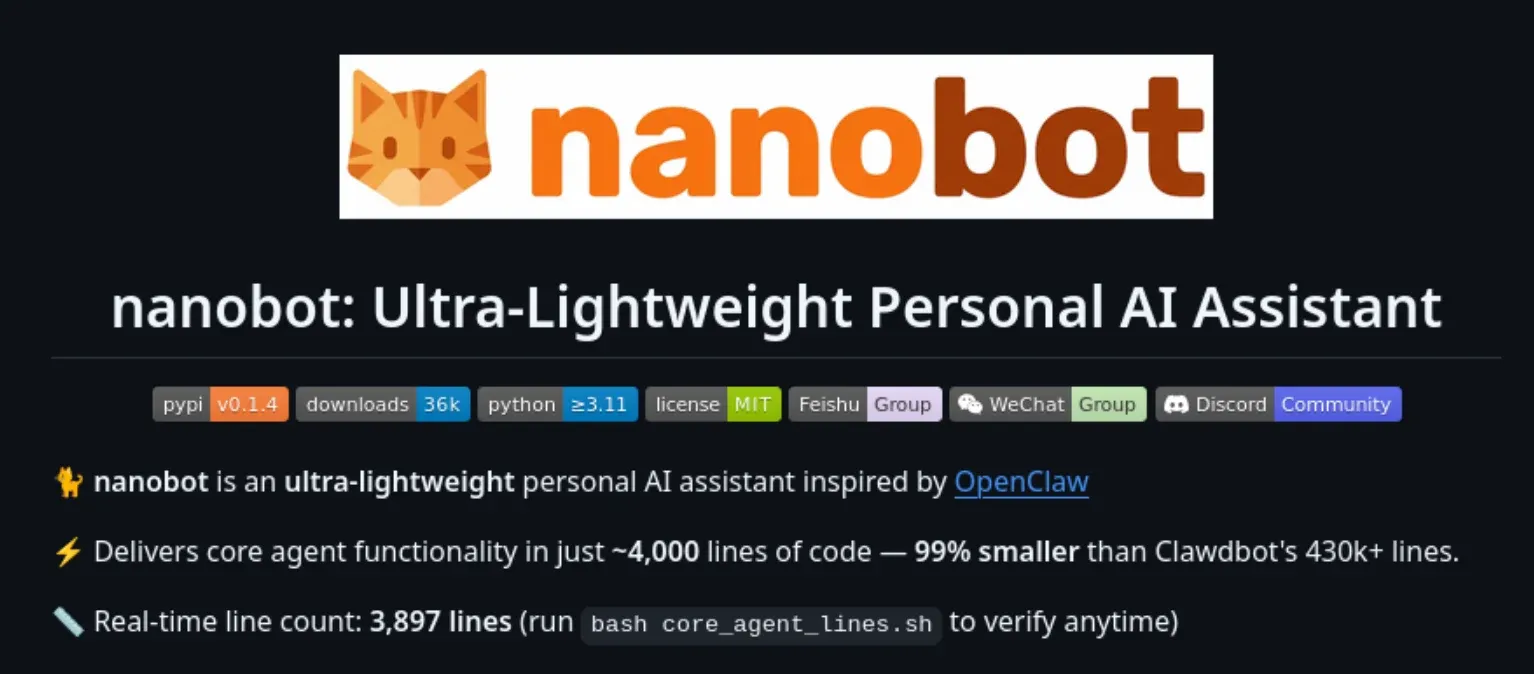
NanoBot was built from the ground up at university of Hong Kong with resource-constrained environments as the primary design constraint rather than an afterthought. It delivers core AI agent functionality in roughly 4,000 lines of Python which is 99% smaller than OpenClaw's 430,000+ line codebase.
The radical minimalism is intentional. NanoBot positions itself as the research-friendly alternative for people who want to understand how AI agents actually work without drowning in abstraction layers. The developers even run a line-counting script in the repo so that you can easily verify the size claim.
Features cover the essential. It has persistent Markdown memory, web search, background agents, scheduled tasks, 11+ LLM providers, and strong messaging platform support, including Telegram, Discord, WhatsApp, and Asian platforms like Feishu and QQ.
Note that there is no massive plugin marketplace, no browser automation out of the box.
PicoClaw
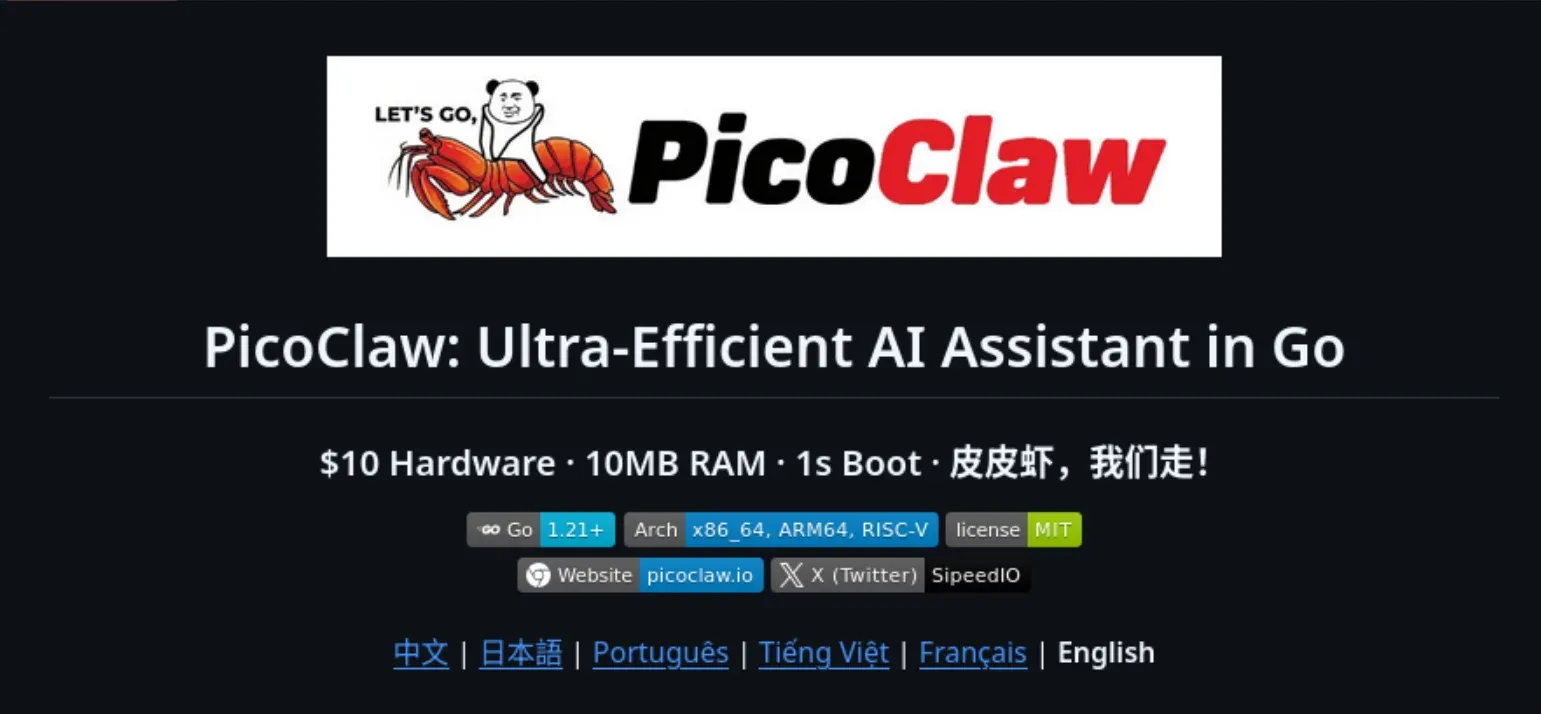
PicoClaw is an ultra-lightweight OpenClaw alternative written in Go by Sipeed, a Chinese maker of inexpensive RISC-V and ARM development boards. It uses less than 10 MB of RAM which is 99% smaller than OpenClaw's 1+ GB requirement and boots in under 1 second, compared to OpenClaw's 500+ second startup time on low-end hardware. This si what the developers claim on its GitHub repo.
The project specifically targets $10 single-board computers like the LicheeRV Nano, a RISC-V SBC with only 256 MB RAM, and ships as a single binary that runs on RISC-V, ARM64, and x86 architectures.
It provides AI agent functionality through messaging platforms like Telegram, Discord, QQ, and DingTalk, and supports multiple LLM providers including OpenRouter, Zhipu, Gemini, Claude, GPT, DeepSeek, and Groq. The tool suite includes shell execution, file management, and web search, with voice transcription available through Groq's Whisper API.
IronClaw
IronClaw is a security-focused OpenClaw alternative built in Rust by Near AI. The project launched with a clear philosophy stated in the repo: "your AI assistant should work for you, not against you." It emphasizes verifiable privacy and transparency through open-source code that anyone can audit.
The core security architecture uses WebAssembly sandboxing for tool execution rather than Docker containers. This provides capability-based permissions where tools must explicitly opt into HTTP access, secrets, or calling other tools. Credentials are injected at the host boundary and never exposed to WASM code, with leak detection scanning both requests and responses. The system also implements prompt injection defense through pattern detection, content sanitization, and policy enforcement.
IronClaw requires PostgreSQL with the pgvector extension for persistent memory and uses a hybrid search system combining full-text and vector search. It supports multiple channels including REPL, HTTP webhooks, WASM-based Telegram and Slack integrations, and a web gateway with real-time streaming. The project can dynamically build new tools on the fly and supports the Model Context Protocol for additional capabilities.
ZeroClaw
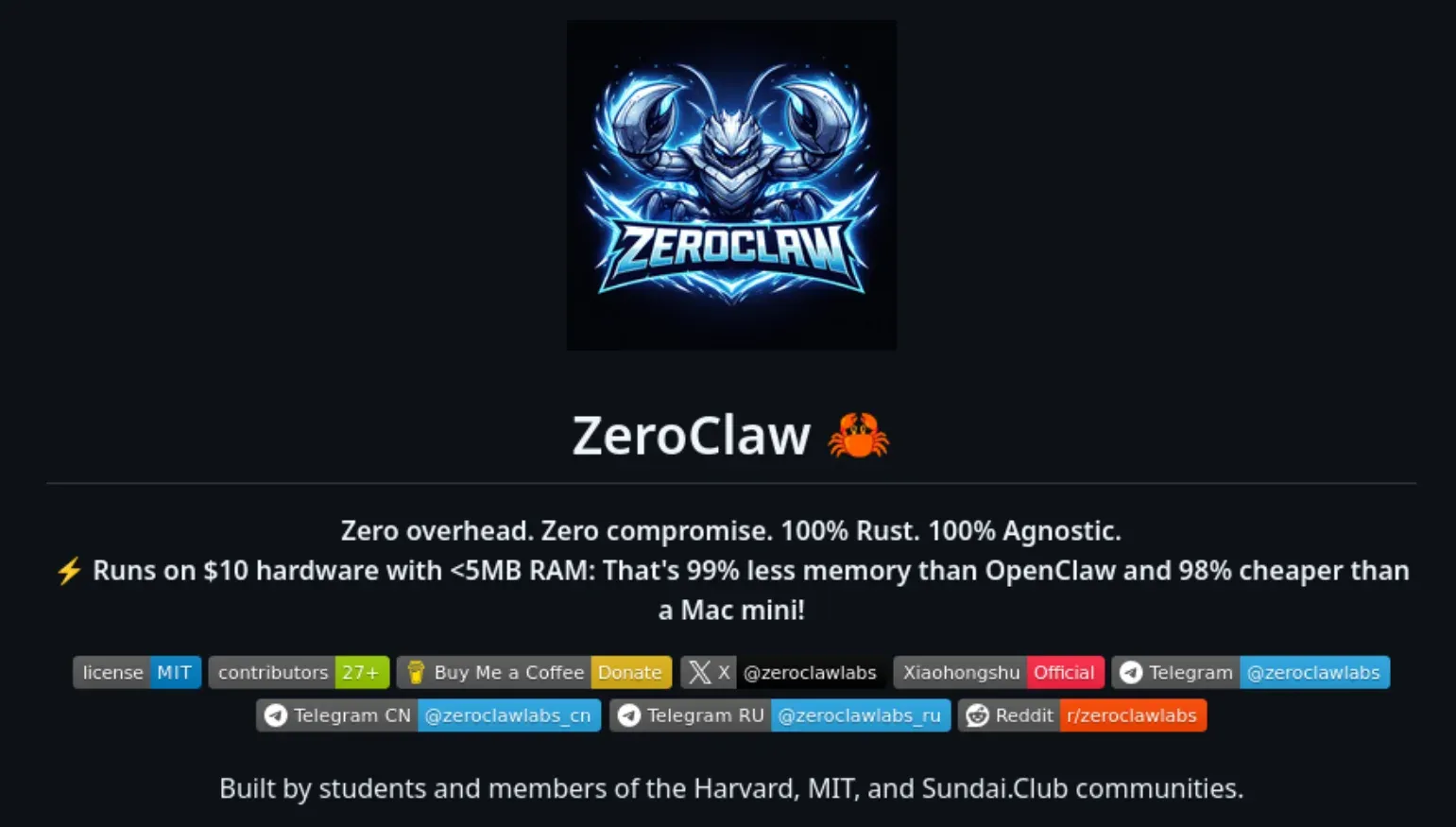
ZeroClaw is a Rust-based OpenClaw alternative positioning itself with the tagline "Zero overhead, Zero compromise." The project compiles to a static binary around 3.4 MB with startup times under 10 milliseconds and memory usage below 5 MB, making it roughly 99% smaller than OpenClaw in resource consumption.
The architecture uses Rust's trait system for pluggable components, with the core split into layers for AI providers, channels, and security. It supports over 22 LLM providers including OpenAI, Anthropic, Gemini, and Mistral, along with messaging platforms like Telegram, Discord, and Slack. Security operates on three tiers: ReadOnly for read-only access, Supervised with allowlists as the default, and Full access within workspace sandboxing.
NullClaw
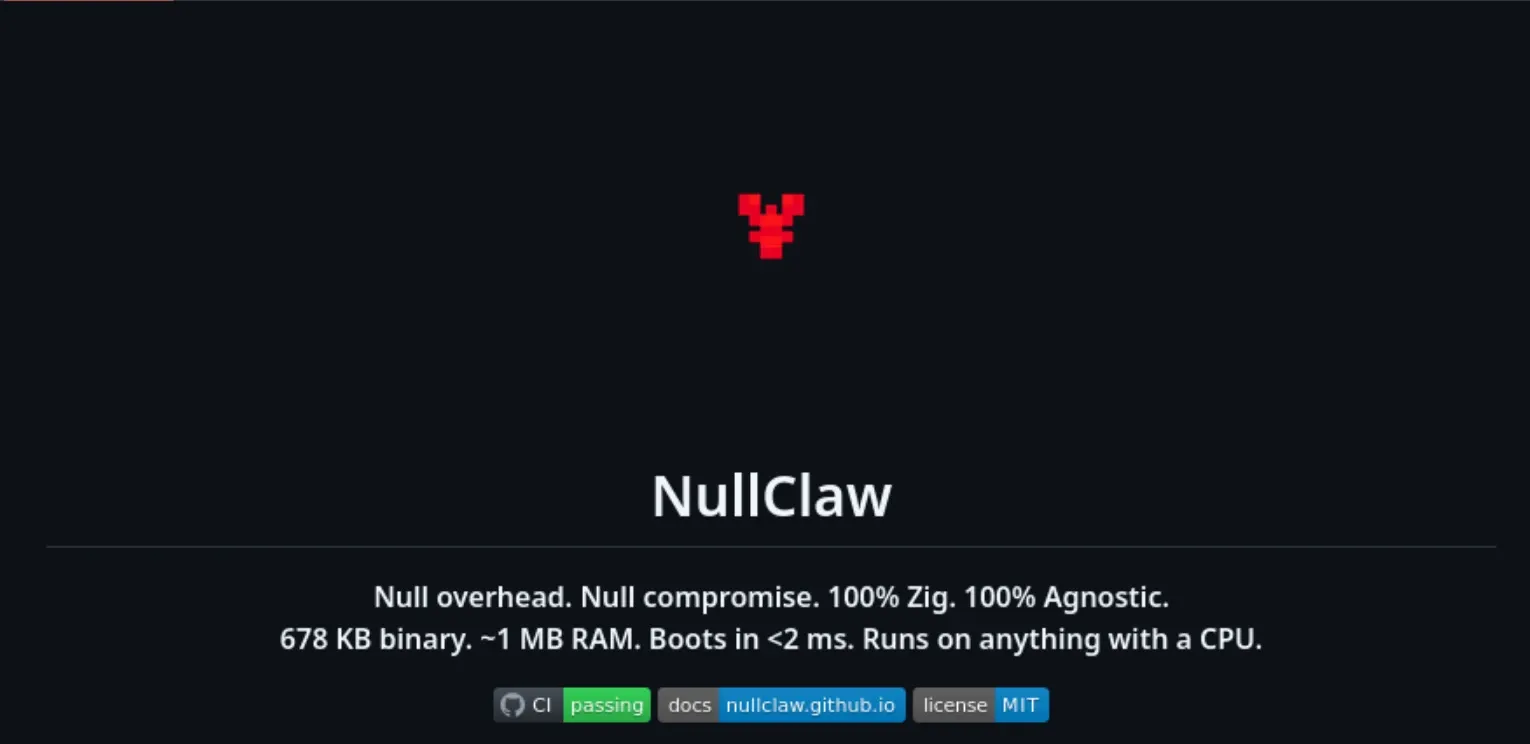
NullClaw is a Zig-based OpenClaw alternative that pushes efficiency to its absolute limit. The project compiles to a 678 KB static binary, uses roughly 1 MB of RAM, and boots in under 2 milliseconds on Apple Silicon (under 8ms on low-end hardware).
The project ships with 2,843 passing tests, the highest test coverage in the OpenClaw ecosystem. It's MIT licensed with 1,400+ GitHub stars.
zclaw
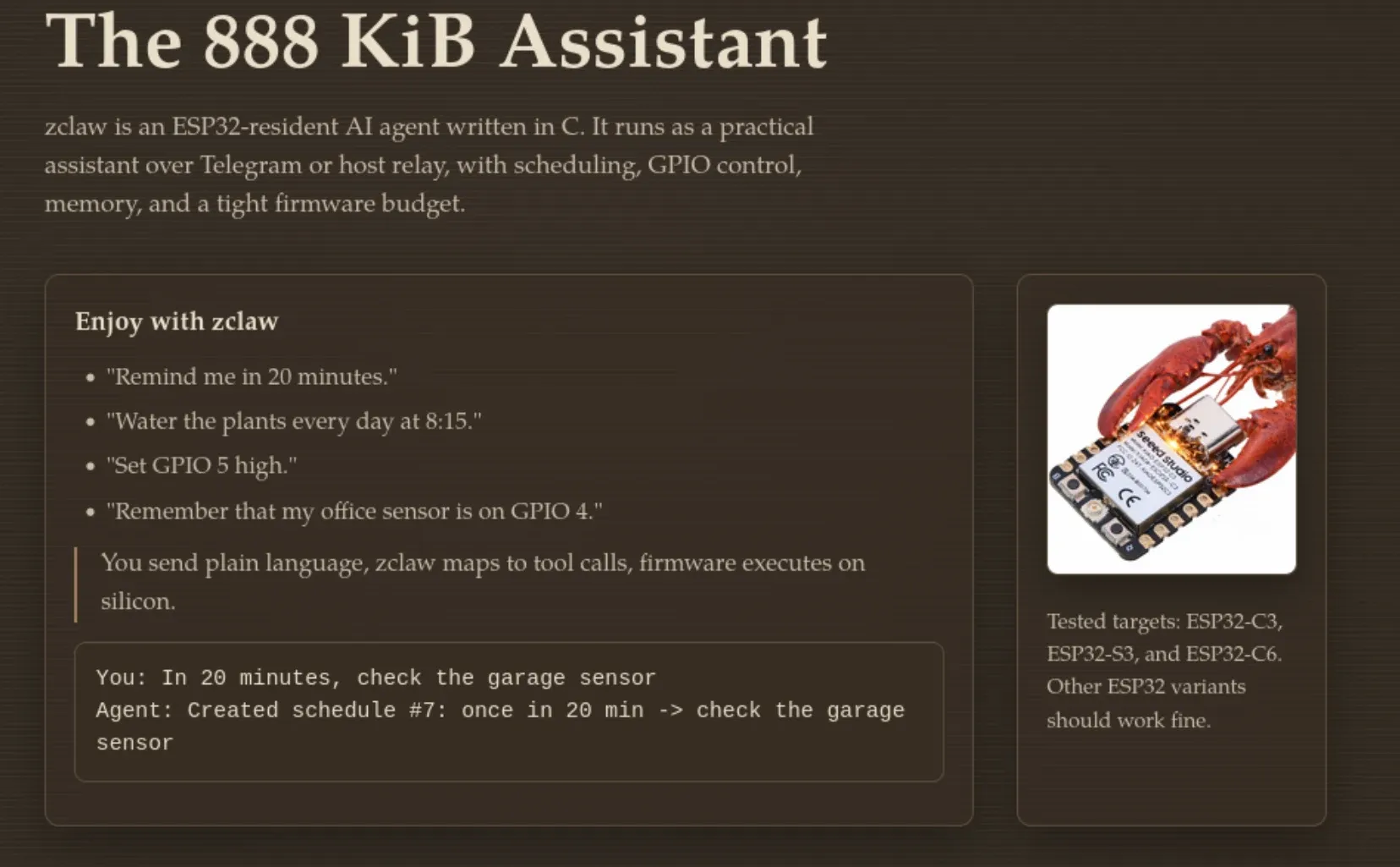
zclaw is a C-based AI assistant designed to run on ESP32 microcontrollers with a strict firmware size target of 888 KB or less. The project targets ultra-low-cost hardware like the Seeed XIAO ESP32-C3, proving that AI assistants can function on devices that cost just a few dollars.
The implementation supports scheduled tasks with timezone awareness, GPIO control for interacting with physical hardware, persistent memory across reboots, and custom tool composition through natural language. Users can chat with their assistant via Telegram or a hosted web relay. The project works with mainstream AI providers including Anthropic, OpenAI, and OpenRouter.
Tested targets include ESP32-C3, ESP32-S3, and ESP32-C6, though other ESP32 variants should work with minor configuration adjustments. The project ships with various utility scripts for building, flashing, provisioning credentials, and benchmarking latency through both relay and direct serial paths. Secure mode enables encrypted credential storage in flash memory.
Mimiclaw
To some extent, MimiClaw is similar to zclaw. It is a bare-metal implementation of the OpenClaw AI assistant architecture designed for ESP32-S3 microcontrollers. Written entirely in C, it eliminates the need for Linux, Node.js, or any operating system, targeting hardware that costs around five dollars with 16 MB flash and 8 MB PSRAM.
The project draws power from USB at half a watt, enabling continuous operation. Users interact with their assistant through Telegram after configuring WiFi credentials, bot tokens, and Anthropic API keys directly in the source code through a secrets header file. The implementation stores memory as plain text files on flash storage, including SOUL.md for personality configuration, USER.md for user preferences, MEMORY.md for persistent knowledge, and dated daily note files.
Conclusion
Choosing the right framework comes down to honestly assessing your hardware constraints, your tolerance for configuration complexity, and how much of your existing OpenClaw workflow you need to preserve.
None of these projects are perfect, but each of them represents a genuine effort to make automation and control software accessible on the kind of hardware that most people can actually afford to deploy at scale.
This ecosystem of OpenClaw like projects keeps on growing. If you find other such interresting projects, share it with all of us.