



The year 2025 was happening for Linux. From Rust making inroads in the kernel to AI knocking on the door, we have seen plenty.
As we inch closer to the new year, there’s an opportunity to look forward with careful analysis, trend watching, and gut feeling.
At It's FOSS, we had a casual interaction about what we will be seeing on desktop Linux scene in 2026. That discussion led to this article. Sourav and I collaborated to give our predictions on where (desktop) Linux will be heading in the new year.
Take a cup of tea/coffee and enjoy this article and take part in the discussion by sharing your own predictions.
1. More Linux apps will see local AI integration

I have a feeling we will be seeing more local AI capabilities in Linux apps going into 2026.
Calibre surprised me recently. Of all the apps, I didn't expect Calibre to be the one adding AI features—but it did, and they actually make sense. If you have a huge eBook collection like I do, having local AI help with book discussions, recommendations, and summaries is genuinely useful. And it's all happening on your machine through LM Studio!
ONLYOFFICE introduced the option to add local AI agents. Kdenlive have already introduced some AI features in the past and I won't be surprised to see more applications offering the AI integration.
I will be more than happy if we keep the options open and have the ability to use a locally installed LLM through Ollama or LM Studio.
While it may not be for everyone, but we shall soon find usage for our daily computing life. Imagine asking a locally installed AI about "all the taxation files from last 10 years that have filed tax greater than XYZ amount". Or, asking the AI to find the image of your identity card by giving it the ID number (part of the image).
The future of AI will also be local, where the processing takes place on your computer and the data doesn't leave your system. I am rooting for small LMs that don't require a lot of computation power and can handle specific tasks.
The Linux Foundation also launched something called the Agentic AI Foundation. I am not entirely sure where that's headed yet, but it makes me wonder what kind of AI innovations might specifically come to Linux in 2026. If nothing else, it shows the momentum is there.
2. Wayland will continue its take over

2025 has been a year when we saw Ubuntu, Fedora, and KDE Plasma make moves to ditch the Xorg session (X11) completely in favor of Wayland. I know these are different projects; some are Linux distributions while the other is a desktop environment, but the shift is very obvious.
Going forward into 2026, we will be seeing a more radical shift towards Wayland as many popular distros work on fully ditching Xorg support and relying on XWayland to run X11 apps instead.
For most people, this transition should be okay, but there might be issues with older software that have not been updated for Wayland yet.
3. Linux gaming will be bigger than ever

The gamer inside me can see that Linux as a platform for playing video games is maturing with each passing day. The gains made in important components like Wine, MESA, the Rust-based graphics driver for NVIDIA, and the Proton compatibility layer instill hope.
On the other hand, Linux distributions like Bazzite and Nobara Linux are truly some of the best gaming-centric offerings out there! I have used both of this during 2025, and they managed to surprise me.
And don't even get me started on the upcoming Steam Machine. It is driven by SteamOS, which is also Linux-powered!
Suggested Read 📖: Is Linux Ready For Mainstream Gaming In 2025?
 Sourav Rudra
4. There will be more RISC-V hardware
RISC-V is no longer just a concept confined to embedded systems and development boards. It is slowly becoming a legitimate option for consumer-grade hardware.
DeepComputing's RISC-V Mainboard for the Framework Laptop 13 is a fine example of this. This mainboard uses a StarFive JH7110 SoC with four SiFive U74 cores and supports both Ubuntu and Fedora. The modular design means RISC-V is now available in an actual laptop form factor, not just experimental hardware.
There's also LILYGO's T-Display P4 handheld that integrates a dual-core ESP32-P4 RISC-V processor, an AMOLED display, and LoRa connectivity, all for around $119.
Even India is pushing for RISC-V development. The country's Centre for Development of Advanced Computing (C-DAC) unveiled the DHRUV64 processor, a dual-core 1GHz chip built on the 28nm process.
I agree that the specs don't look promising, but the nation has already revealed plans for somewhat performant chips like the quad-core DHANUSH64 (1.2GHz, 28nm) and DHANUSH64+ (2GHz, 16nm/14nm), both expected around 2027.
5. GNOME will continue replacing default applications

For the last couple of years, GNOME has been quietly replacing their old fleet of default applications with modern counterparts that are built on GTK-4 and libadwaita. GNOME wants to give you a cohesive modern experience that plays well with Wayland, HiDPI and touch screens.
Over time, we have a new default text editor (instead of Gedit), terminal emulator (instead of GNOME terminal), screenshot tool, document reader (instead of Evince).
Starting with Ubuntu 26.04 or any distro that will use GNOME 50 will have a new default video editor. I am sure there will be a few more default apps replaced in 2026.
6. Distros will offer immutable variants more prominently
Immutable distros are not a new thing. They gained good popularity with NixOS but only among 'expert' Linux users. Recently, many mainstream distributions have begun to provide an immutable version, not only for servers but also for desktop.
Fedora has a fleet of them, openSUSE has MicroOS, even Nitrux moved to become immutable. Ubuntu is also heading in that direction.
I just see more immutable variants coming up and highlighted more prominently.
7. Hyprland will continue its rise
It's not that we did not have enough window managers before. They have been on the scene for decades.
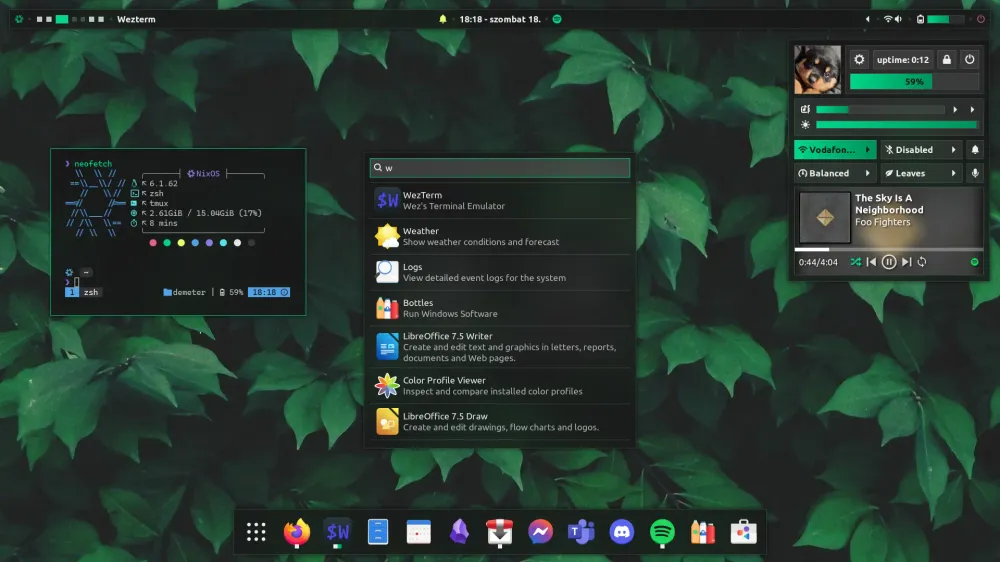
But Hyprland came and took the Linux ricing community by storm. It felt as if most of the beautiful desktop setup screenshots shared on Reddit came from Hyprland. It became the 'hyp' thing among the enthusiasts. Offering Hyprland by default helped obscure distros like Omarchy become popular. Betting big, Nitrux OS switched to Hyprland by default.
And this is when users have to deal with lots of configuration files everywhere in Hyprland, even for simplest of the activities. I guess the availability of dot files and new config tools have eased the complexity a little.
Expect more distros to start offering Hyprland in their download sections.
8. Rustification will grow stronger
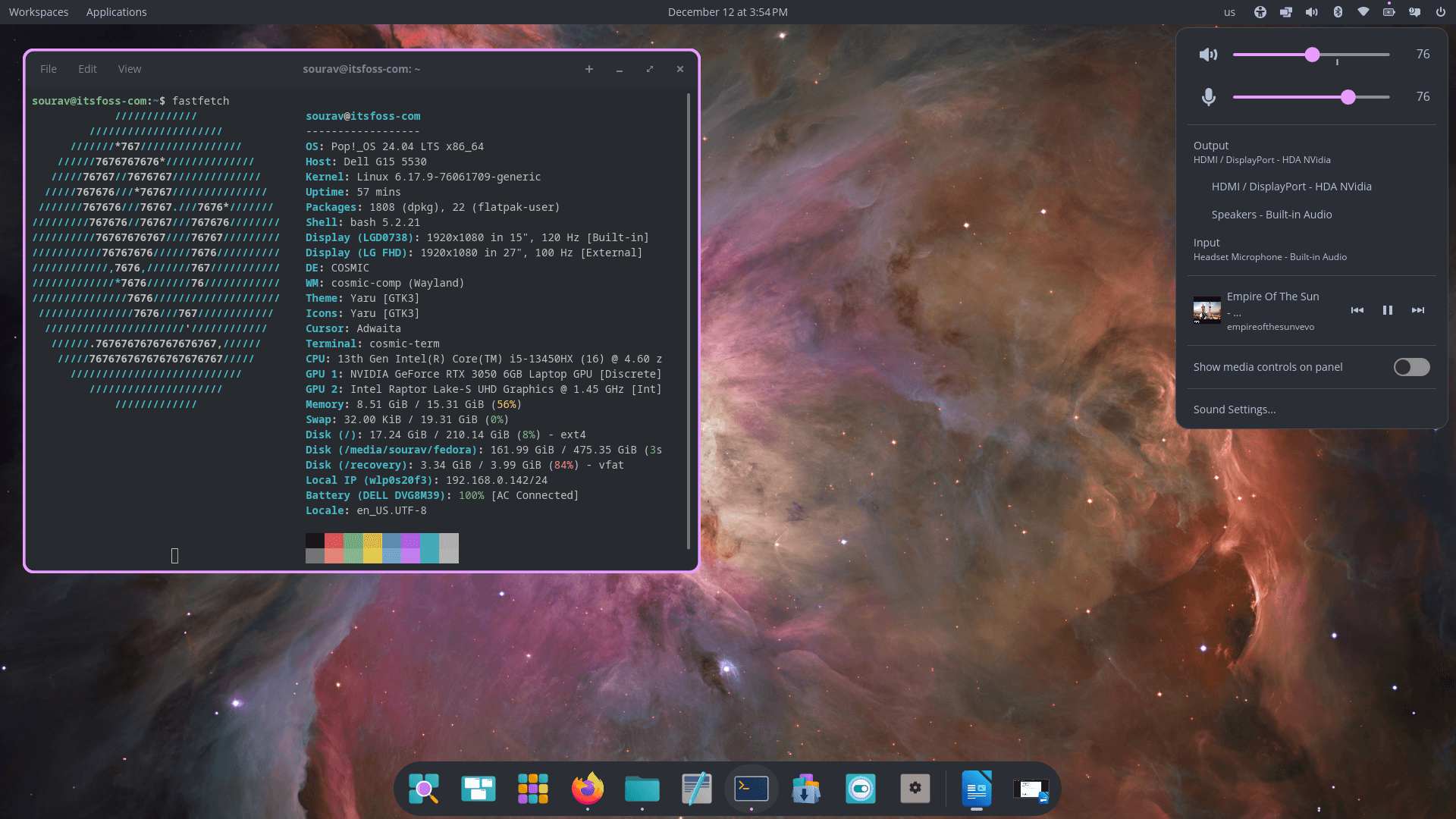
Rust is in the Linux kernel now. Ubuntu is planning to replace GNU Coreutils with their Rust counterpart. Rust-based implementation of sudo is already included in the latest release of Ubuntu 25.10. Additionally, Pop!_OS recently released the stable version of COSMIC desktop, a brand-new desktop environment entirely written in Rust.
This trend will continue in 2026. We will see more and more classic tools getting Rust implementations.
It's not just Linux. Microsoft plans to replace the entire C/C++ code with Rust by 2030. The future seems to be Rust and no one wants to left behind. We can understand this from the fact that Linus Torvalds who has been a vocal supporter of C, allowed Rust code in Linux for the first time ever.
Compared to 34 million lines of C programming, Rust only has a few thousands for now. But I strogly feel that Rust will start gaining more ground rapidly, specially when people want to 'rewrite everything in Rust' because it's 'memory safe'.
9. More European countries will switch to Linux and/or open source software
Earlier in 2025, Denmark set out to replace Microsoft Office with open source alternatives, aiming to move 30,000 government computers from Microsoft software to Linux and LibreOffice. And, a few weeks ago, we heard of the German state of Schleswig-Holstein potentially saving €15 million each year after kicking out Microsoft.
This isn't just a European trend to be honest. The Government of Canada has published a Digital Sovereignty Framework focused on ensuring greater national control over data, cloud infrastructure, and critical digital systems, with procurement and policy changes aimed at reducing reliance on foreign technology vendors.
I am thinking this trend will continue in 2026 and we will be seeing more such positive news where government put more emphasis on open source software and administrators switch to the alternatives. Wishful thinking? Maybe. But I am hopeful for this. We can hope, right?
What's your prediction?
This was ours, Sourav and Abhishek's predictions for desktop Linux. An year from here, we will like to come back and see which of ours 'prophecy' came true.
While we wait for that, I would like your opinion on this. What trend do you see for desktop Linux in 2026? The comment section is waiting for your opinion and so are we :)