

Sabayon Linux was a Gentoo-based distribution that existed from the mid-2000s until 2019. It aimed to make Gentoo accessible to regular users without the usual compilation headaches.
Created by Fabio Erculiani, Sabayon offered pre-built binaries through its Entropy package manager. This let users skip the hours of compiling while still getting the Gentoo experience.
Now Fabio has shared that he's working on a new immutable, atomic Linux distro called matrixOS. Like Sabayon, it's also based on Gentoo.
matrixOS: Overview ⭐
The project's motto is "emerge once, deploy everywhere." In Gentoo, emerge compiles packages from source on practically every machine you set up. matrixOS remedies this by building once and distributing binaries, so you skip the compilation wait entirely.
Plus, it uses OSTree for atomic upgrades. Your system either updates completely or not at all. The base is read-only, which prevents accidental breakage.
Gaming is also one of its priorities, with the latest Mesa and NVIDIA drivers handling AMD and NVIDIA GPUs, so graphics work right away without you needing to go looking for drivers.
Cooling management is handled by coolercontrold and liquidctl, and the filesystem runs btrfs on both /boot and root with zstd compression. The root partition auto-resizes on first boot and NTFS drives work using the NTFSPlus driver.
SecureBoot support is built in with certificates you can enroll directly in UEFI BIOS or through Shim MOK enrollment at first boot.
Looking ahead, the project aims to implement proper CI/CD pipelines and testing workflows, rewrite the core tooling in Go (replacing the current bash scripts), and migrate to bootc or build a wrapper on top of OSTree with Unified Kernel Image (UKI) support.
A Quick Look 😶🌫️
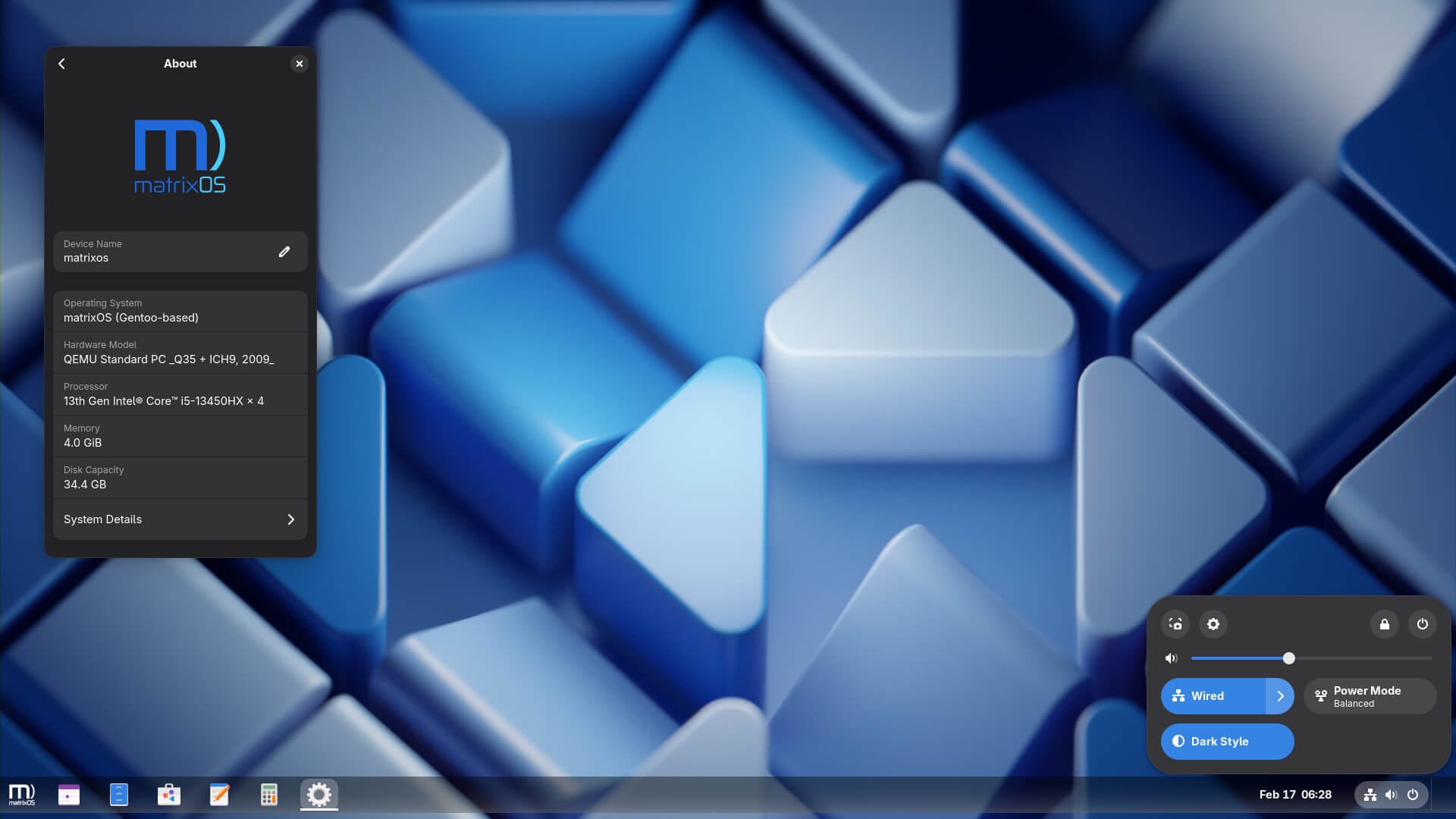
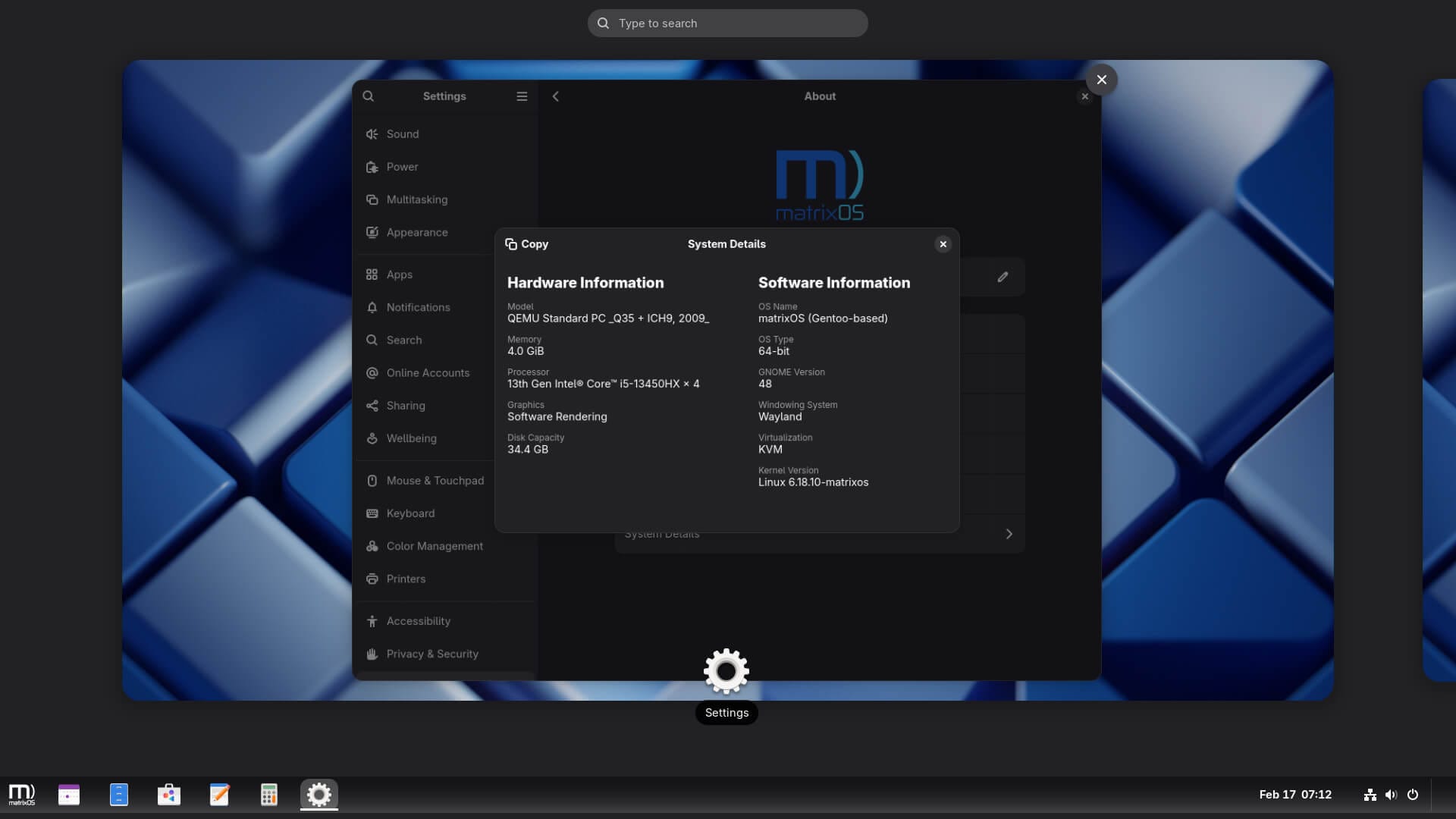
matrixOS' GNOME implementation looks slick.
Seeing that matrixOS is an experimental distro, I ran it as a virtual machine using Virtual Machine Manager. Right away, I found the GNOME interface familiar, but with a Windows-like taskbar at the bottom.
I could access pinned apps, notifications, and the quick-settings menu from here, with a handy button on the far-right letting me focus on the desktop when multiple app windows were open.
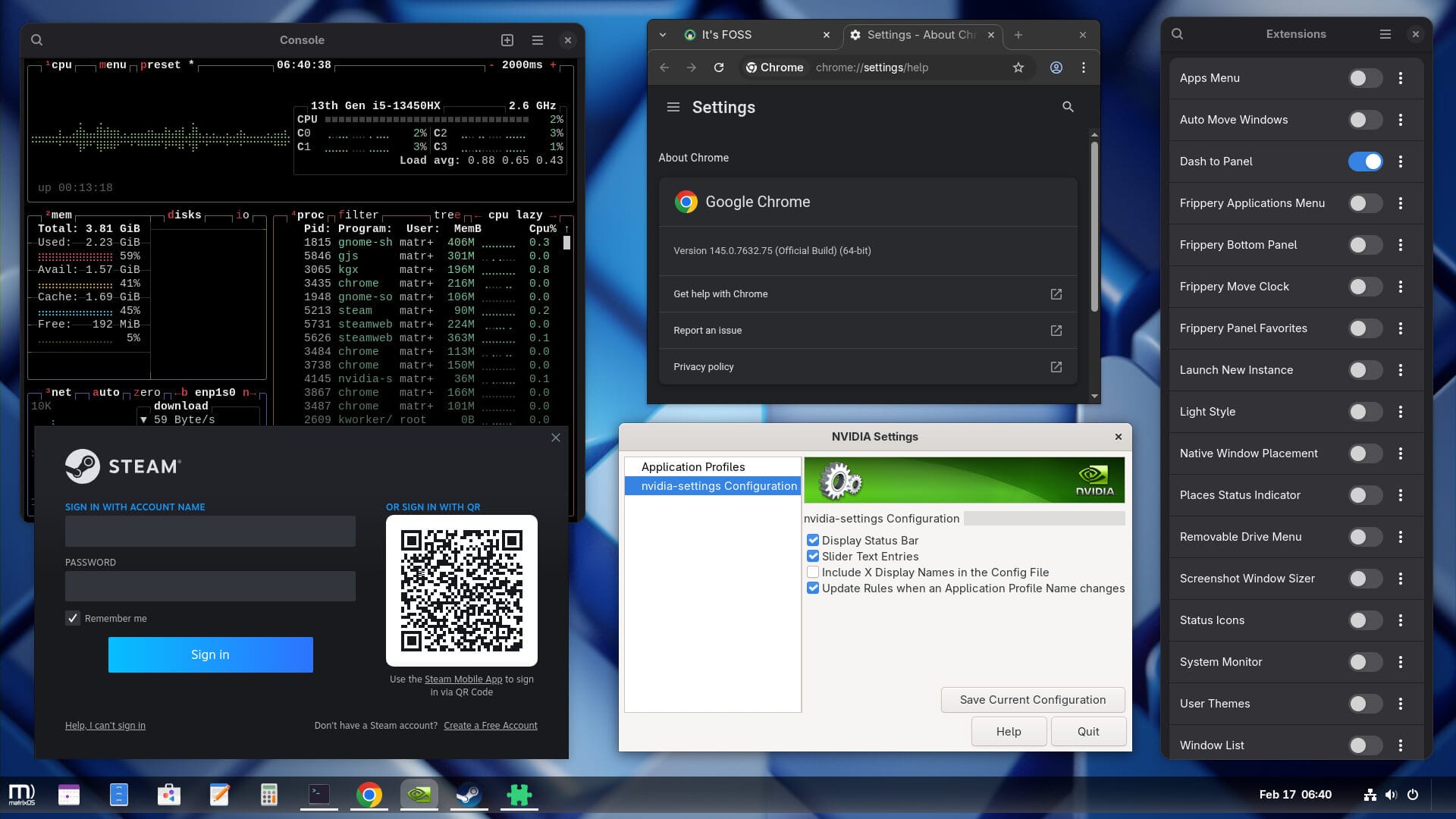
Speaking of apps, there are plenty of useful ones included, like Steam for gaming, Btop for system monitoring, Google Chrome for browsing, and gedit for text editing. Classic games like Mahjong and Chess are also pre-installed.
Likewise, the distro ships with Google Antigravity for AI-assisted coding, and there's built-in support for GNOME Shell extensions if you want to further customize the desktop to your liking.
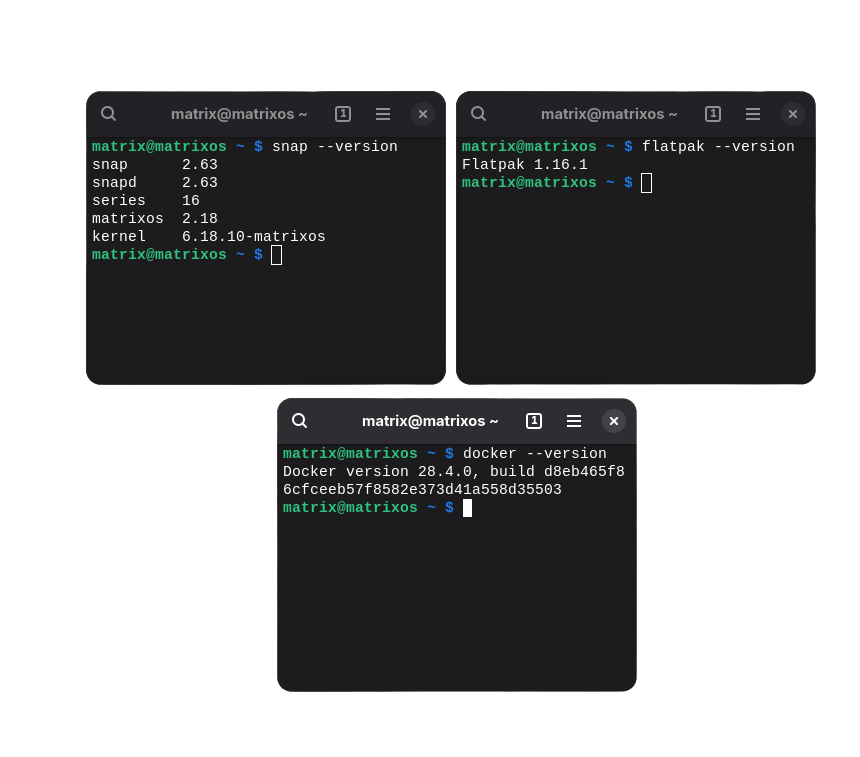
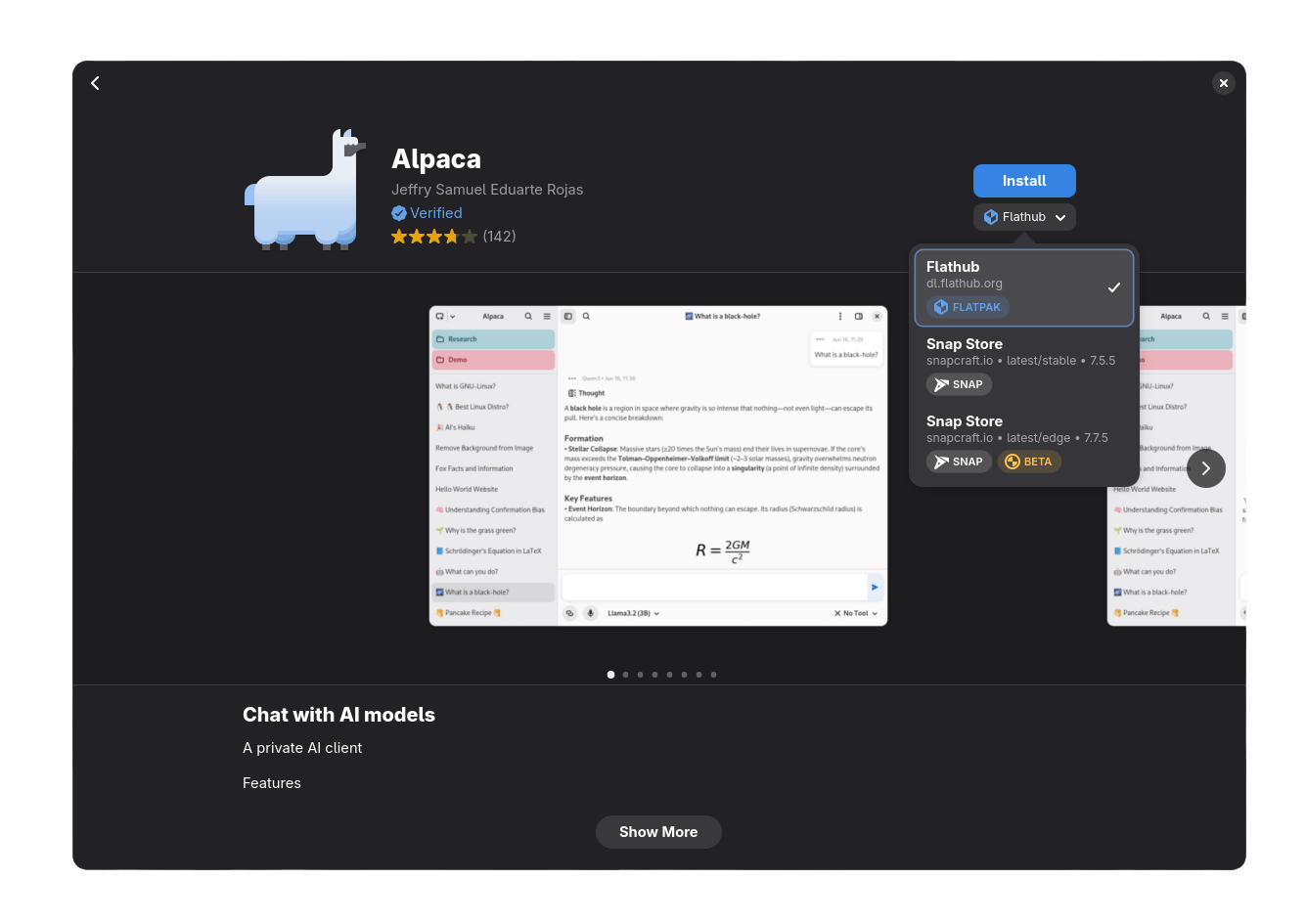
matrixOS gives you many ways to install new apps!
Flatpak, Snap, and Docker are all pre-configured and ready to use, so you have multiple options for installing apps. GNOME Software ties it all together with a simple interface for browsing and fetching applications without you needing to touch the terminal.
Grab an Image 📥
matrixOS comes in three variants: Bedrock, GNOME, and Server. Each is available in raw for flashing to drives and qcow2 for running on virtual machines.
The distro requires UEFI to boot, so legacy BIOS systems won't work. For logging in, the default password is "matrix," and the source code lives on GitHub for people interested in contributing or building from source.
Suggested Read 📖: 7 Best Gentoo-Based Linux Distributions
 Ankush Das