

Many studies have proven that journaling helps manage stress, anxiety, and depression. This works because it helps you process emotions instead of bottling them up. You gain clarity on what is bothering you, and it makes it easy to spot negative thought patterns that hamper your well-being.
I have tried maintaining a physical diary in the past, but the result of it was that I would usually procrastinate and forget that it existed. ☠️
Fast-forward to now, and I think I might've found a solution. I have this habit of checking my phone randomly; what if I wrote a journal entry whenever I picked it up?
StoryPad might be exactly that. An app that could finally help me stick to journaling daily and build the habit.
StoryPad: Your Personal Diary
It is an open source diary app that focuses on a timeline approach rather than a folder-focused one. Your journal entries live on a continuous scrollable timeline that is easy to get used to.
And everything is stored locally on your device by default, unless you choose to sync via Google Drive. Thea Choem built this by leveraging Flutter, ensuring that the app runs smoothly across multiple platforms.
Some of its key features include:
- Mood tracking with 45+ emotions to choose from.
- Privacy lock with PIN, Face ID, or fingerprint authentication.
- Throwback memories showing what you wrote on a certain day X years ago.
- Rich text editing with bold, italic, colors, highlights, lists, and 1300+ Google Fonts.
How Does it Fare?
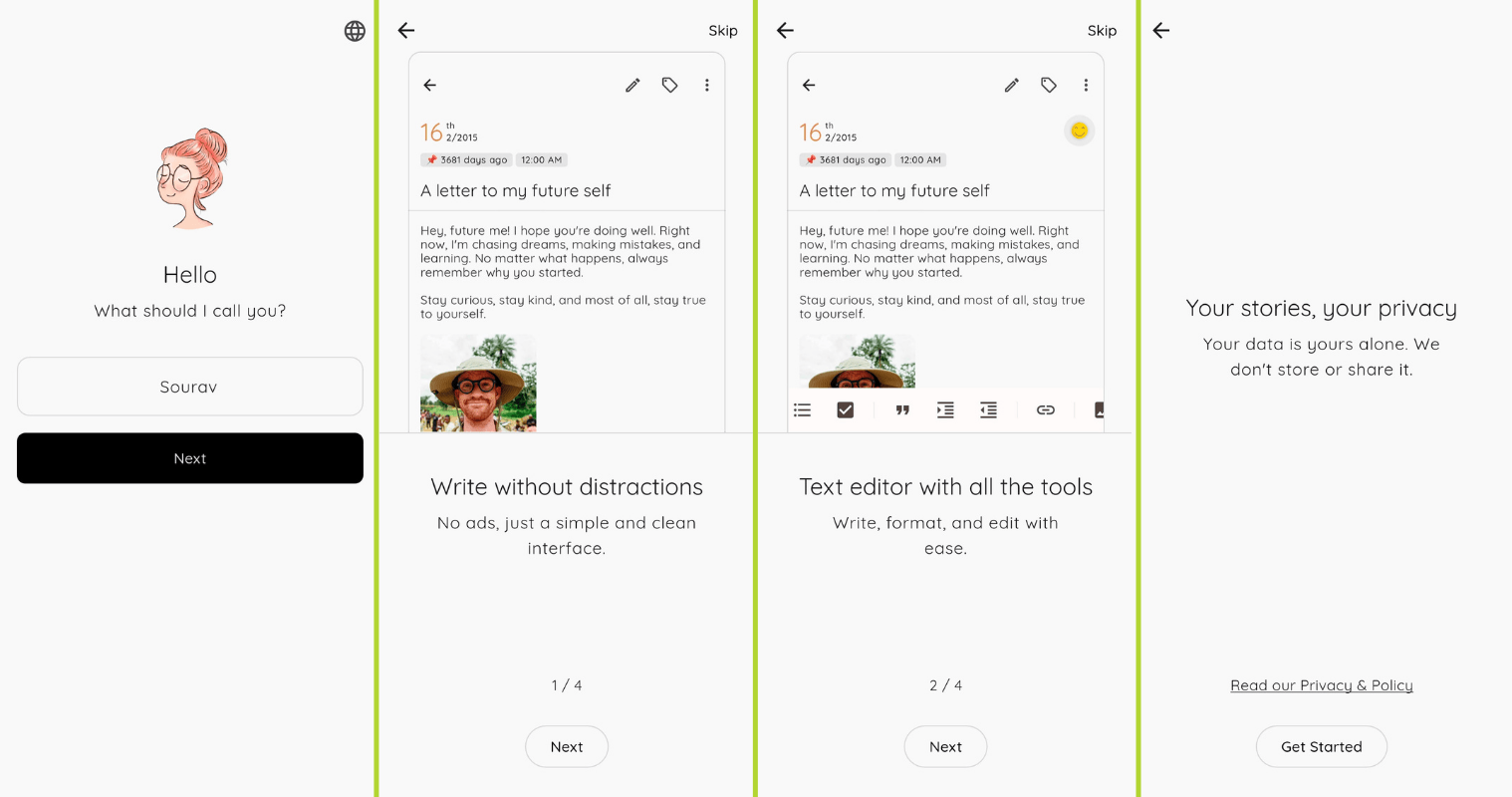
Quite good, actually! On first launch, there is an onboarding process that takes you through what the app has to offer and encourages you to read the privacy policy.
It basically reads that StoryPad doesn't collect or store your personal data on their servers. Everything stays local on your device, and cloud backups go straight to your Google Drive account.
Plus, the app itself felt snappy right from the start, with no weird bugs or inconsistent behavior.
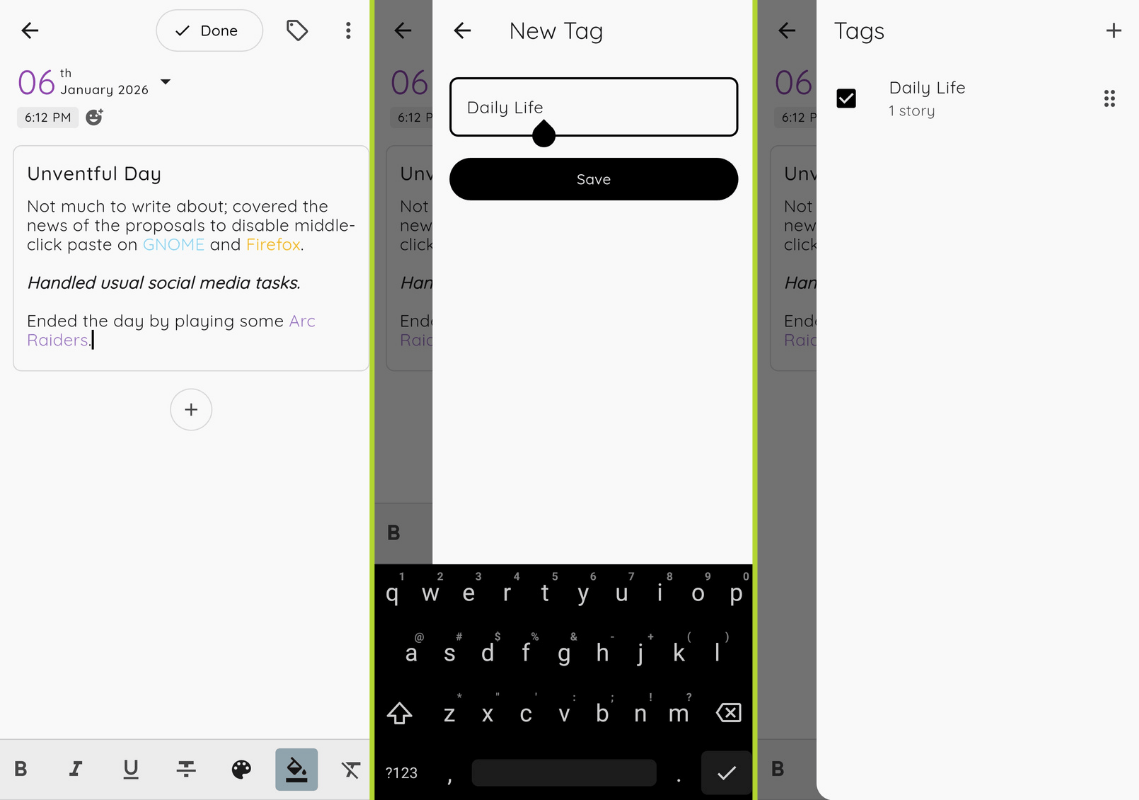
Adding new journal entries (or notes) for specific days was quite easy too. I could effortlessly set the date and time, use the handy rich text editing tools to format text, add colors, create checklists, and insert quotes. Creating and adding new tags to the entries was straightforward too!
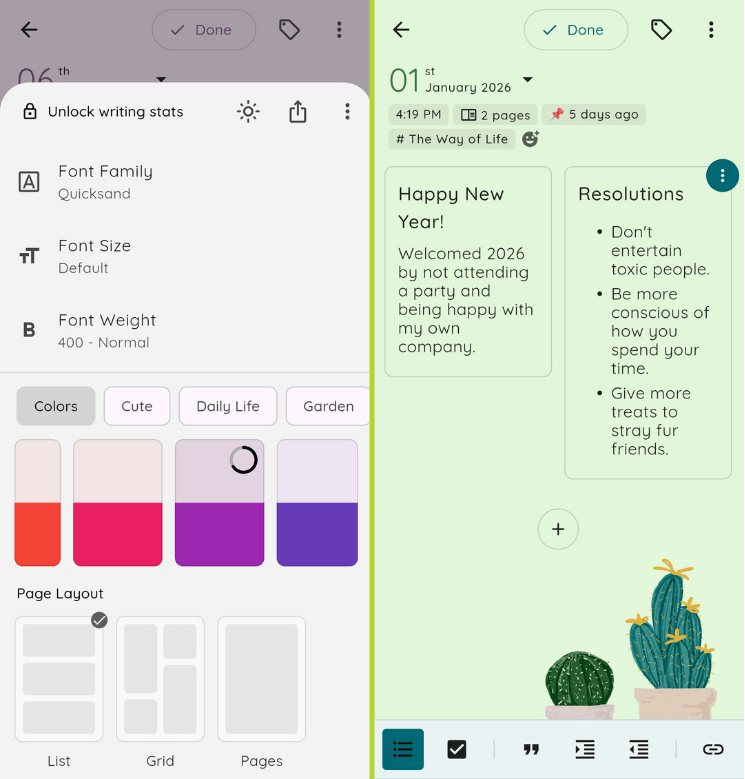
Next up, I went into the three-dot menu on the top-right of the editor to change the note theme, which had plenty of color options to choose from. Some themes are free, and many others are locked behind a paid add-on.
I could also switch between three different page layouts: List, Page, and Grid. The grid layout should work well if you are into bullet journaling, btw. Font selection was massive too, with access to 1300+ Google Fonts.
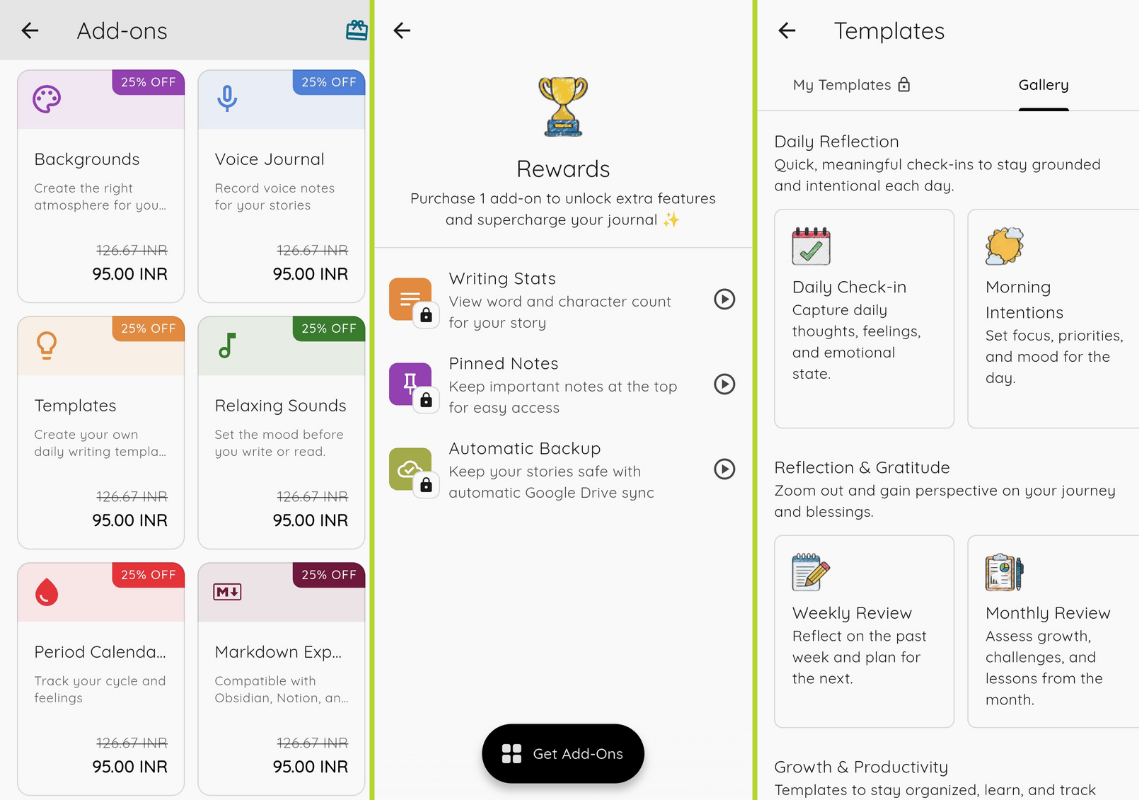
Regarding paid add-ons, StoryPad has quite a few, but these are optional. There are features like relaxing sounds, advanced templates, period tracking, voice journaling, and background images. These are set according to the user's region and are priced nominally.
There's also a rewards program that unlocks some additional perks according to the add-ons you purchase, and there are useful templates that provide you with good starting points if you're stuck on what to write.
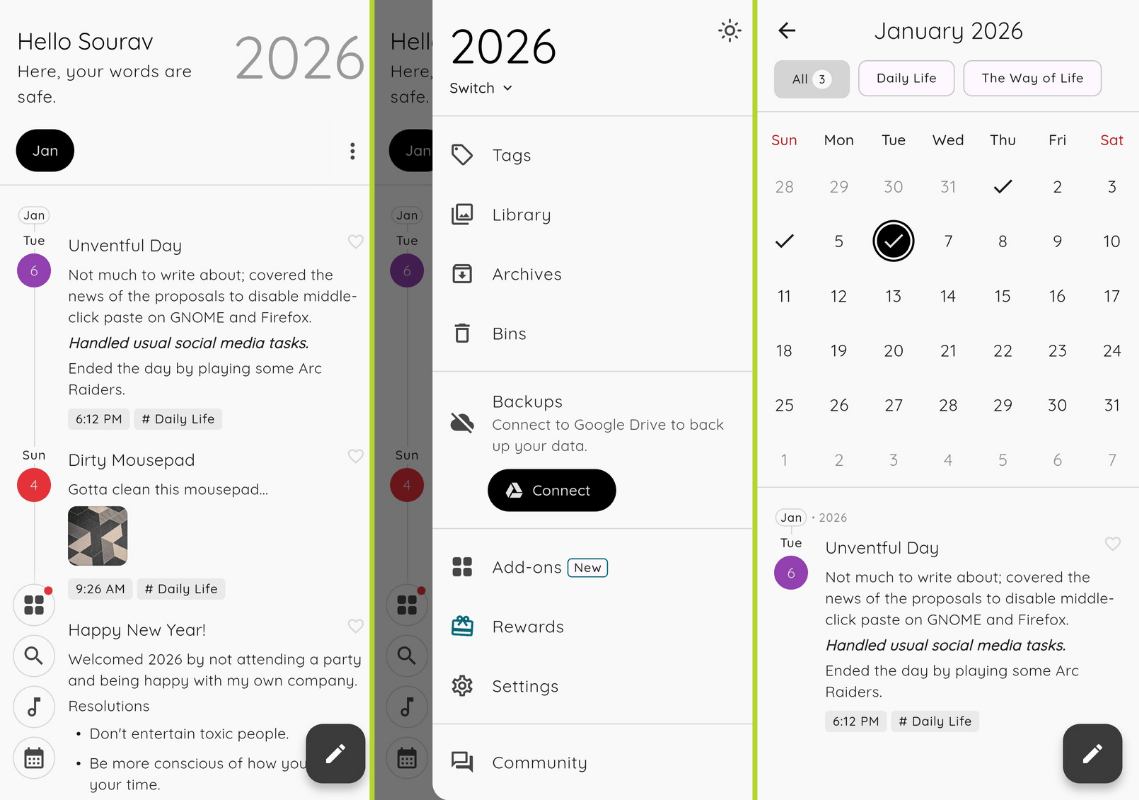
The timeline view turned out to be quite useful for navigating through my entries. I could scroll chronologically without dealing with any folders or categories.
At the bottom-left, there are three buttons for quick access: Search, Relaxing Sounds, and the Calendar View. I found the calendar view particularly handy for jumping between months. If I wanted to check what I wrote last week, a few taps got me there.
Similarly, the sidebar gave me access to tags, my photo library, archives entries, and the trash bin.
Install StoryPad
Android users can get this on the Play Store or via the project's GitHub repository (to build from source). For iOS users, they can get the latest StoryPad release from the App Store.
It would be great if the developer could distribute StoryPad via F-Droid too!