


Red Hat is best known for Red Hat Enterprise Linux (RHEL), the commercial Linux distribution that quietly runs a significant portion of enterprise and government infrastructure worldwide.
They also maintain Fedora, contribute heavily to the Linux kernel, and are the people behind Ansible and OpenShift.
Now they have open-sourced a tool to help organizations figure out where they stand when it comes to digital sovereignty.
For Digital Sovereignty Assessment
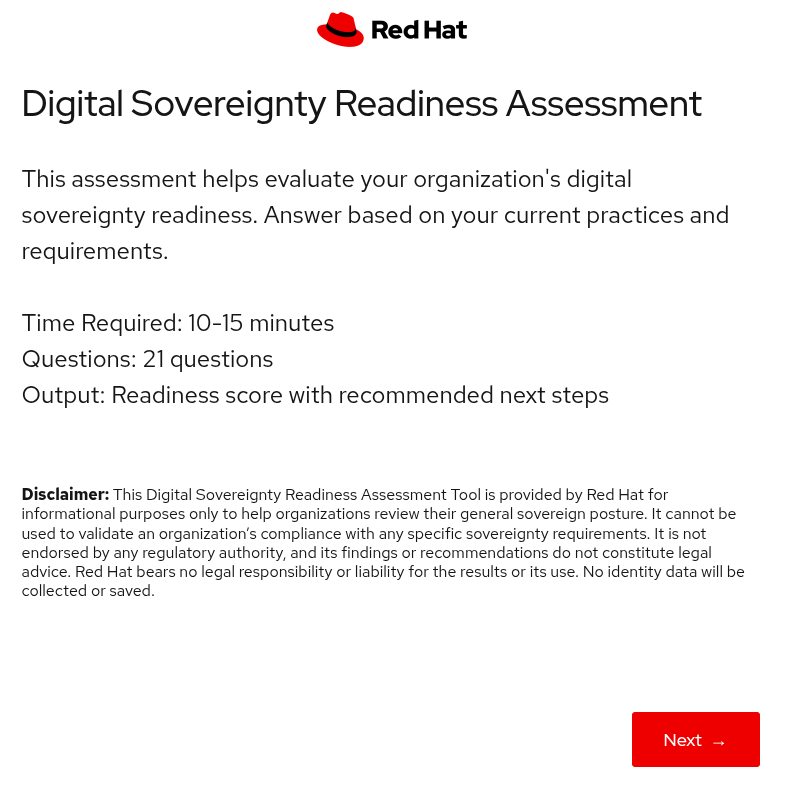
Red Hat has released the Digital Sovereignty Readiness Assessment, a self-service web tool that helps organizations figure out digital sovereignty. It is open source, released under the Apache 2.0 license, and available on GitHub (linked below).
The tool is maintained by Red Hat's Community of Practice (CoP) and is designed to be vendor-neutral, making it useful to any organization regardless of what technology stack they run.
If you were thinking about privacy, the open source version doesn't collect anything, as all assessment data stays in the browser and is never sent to Red Hat or anywhere else.
The assessment covers seven domains: Data Sovereignty, Technical Sovereignty, Operational Sovereignty, Assurance Sovereignty, Open Source Strategy, Executive Oversight, and Managed Services.
It presents 21 questions, takes about 10 to 15 minutes to complete (if done mindfully), and scores respondents across a four-level maturity scale: Foundation, Developing, Strategic, and Advanced.
There are two easy ways to test it. The Red Hat-branded version is hosted on Red Hat's own infrastructure that conveniently ends with a prompt to book a consultation. The other is the self-hostable version that was open-sourced on GitHub.
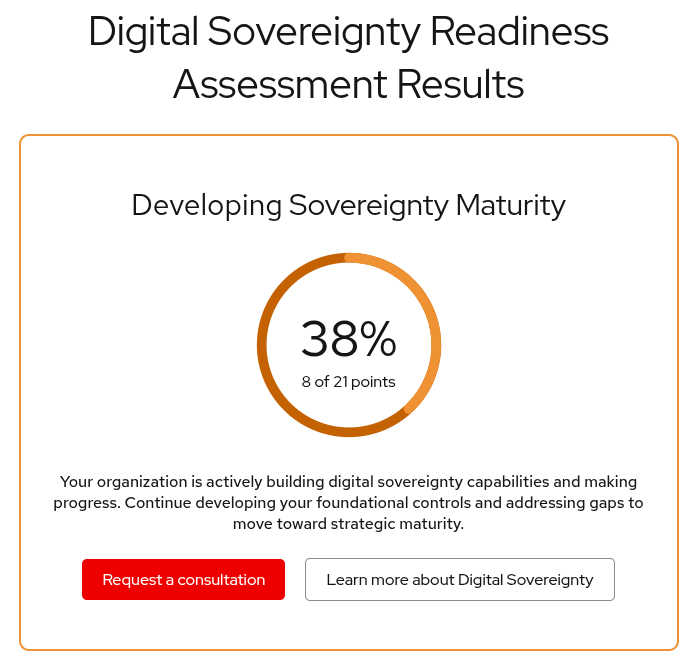
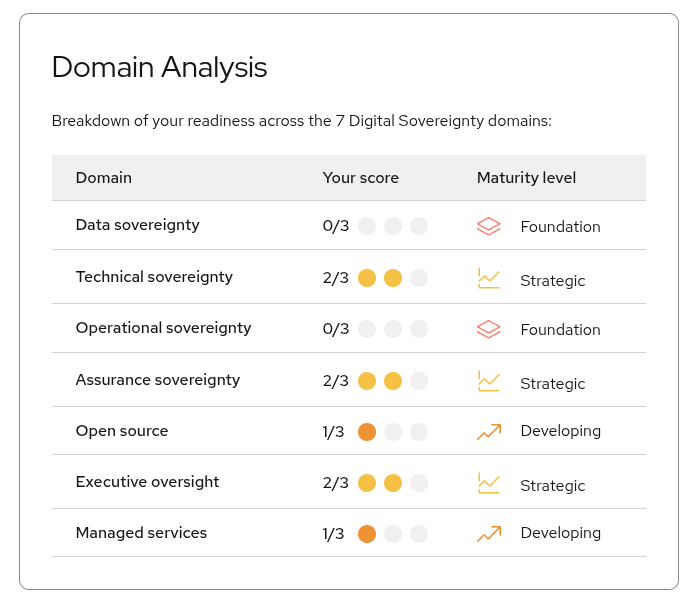
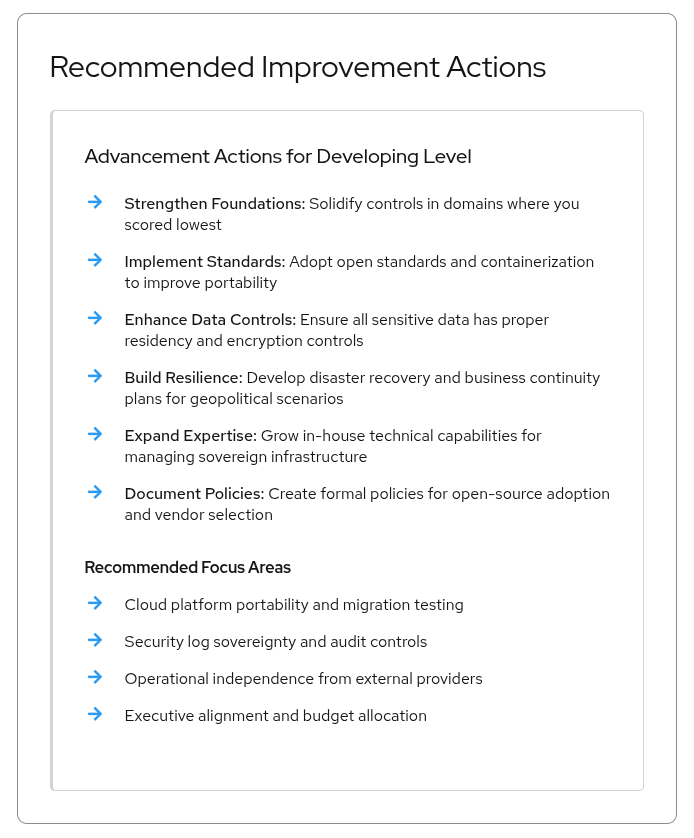
The result of my dummy test of Red Hat's assessment tool.
Christopher Jenkins, Senior Principal Chief Architect at Red Hat, has the latter up on his personal website, which is nearly identical but with different themeing and no nudge to contact Red Hat's sales people.
I ran a dummy assessment on Red Hat's version to see how the tool worked, and it was nice, I guess? I filled out the form with random answers, and the result was a 38% maturity score, with a breakdown of readiness across 7 digital sovereignty domains and some recommended moves I could take to improve the score.
I say "I guess" because I am not exactly well-versed in what it actually takes for something to comfortably call itself digital sovereignty-compliant.
Via: FOSS Force
Suggested Read 📖: Session's Co-Founder Thinks You Don't Need to Ditch WhatsApp Completely
 Sourav Rudra