


Before Microsoft became the company that shipped Windows to corporate desks around the world, it had to start somewhere. That somewhere was a scrappy little operating system written by one guy at Seattle Computer Products.
Tim Paterson built what he initially called QDOS, short for Quick and Dirty Operating System, in 1980. Intel's 8086 chip was out, but CP/M, the dominant OS of the time, had no 8086 support. He wrote something to fill that gap, modeling the CP/M API so existing software would run on it.
Microsoft bought the rights to 86-DOS for just under $100,000, shipped it to IBM as PC DOS 1.0 in August 1981, and retained the rights to sell the same OS to other PC manufacturers as MS-DOS.
That single deal set Microsoft on the path to dominating personal computing for the next two decades.
Fast forward to now
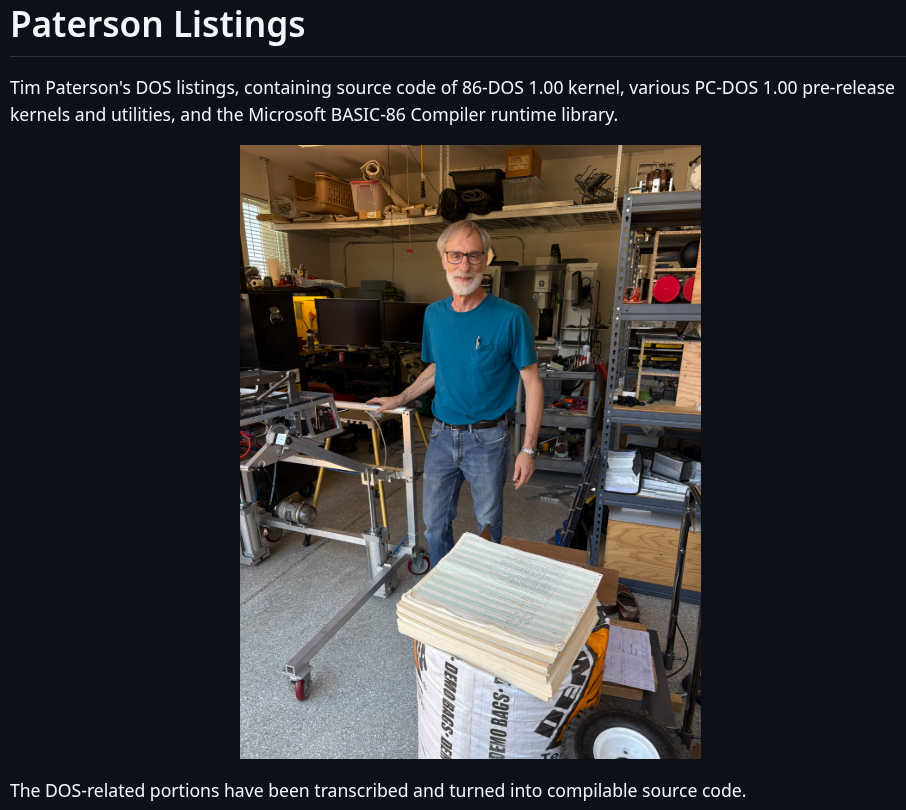
On April 28, the 45th anniversary of 86-DOS 1.00, Microsoft published a blog post announcing that the earliest known DOS source code is now publicly available on GitHub, under the MIT license.
And the story behind it is an interesting one. Tim did not hand over a tidy source archive; instead, what he kept were physical assembler printouts and stacks of continuous-feed paper from 1981 that he had held onto over the decades.
Getting those into usable shape took effort, with historians Yufeng Gao and Rich Cini having to locate, scan, and transcribe the DOS-related portions into compilable code.
What's included are the 86-DOS 1.00 kernel, several development snapshots of the PC-DOS 1.00 kernel, utilities like CHKDSK, and the assembler Paterson used to write the OS itself.
Who's this for?
Honestly, seeing Microsoft open up old code is not that surprising anymore. 6502 BASIC went open source in September 2025. MS-DOS 4.0 in 2024. MS-DOS 1.25 and 2.0 back in 2018. There is a clear pattern at this point.
If you are into retro computing or low-level systems work, this is genuinely worth digging into. The source code is compilable, and you will need a copy of Seattle Computer Products' ASM assembler, which you can pull from any 86-DOS or early MS-DOS release.
The GitHub repository's README has the necessary steps for you to follow.
Suggested Read 📖: Someone Turned a PS5 Into a Linux Gaming PC
 Sourav Rudra
Enjoyed this update? Support independent Linux news coverage
It's FOSS has been helping people use Linux for the past 14 years. Help us stay independent from big tech. Become a Plus member, enjoy ad-free reading and get 5 eBooks.