


The Fedora Project has had an interesting journey since its inception in November 2003. It started as a community-backed effort spun off from Red Hat Linux, which Red Hat had decided to retire in favor of its commercial Enterprise Linux product.
Rather than leave the community without a home, Red Hat partnered with contributors to launch Fedora as an open, community-driven distribution that would push new technologies forward.
That upstream-first philosophy has held ever since. Fedora consistently ships things before most other distributions dare to, from Wayland adoption to newer compiler toolchains, often serving as the real-world test bed for what eventually becomes Red Hat Enterprise Linux.
Of course it is not limited to that; its various flavors serve all kinds of users, starting from desktop users to server administrators, hobbyist tinkerers, and anyone running containerized workloads at scale.
Now, to the topic at hand, a new Fedora release has landed, and as always, we must check out what it offers.
⭐ Fedora 44: What's New?
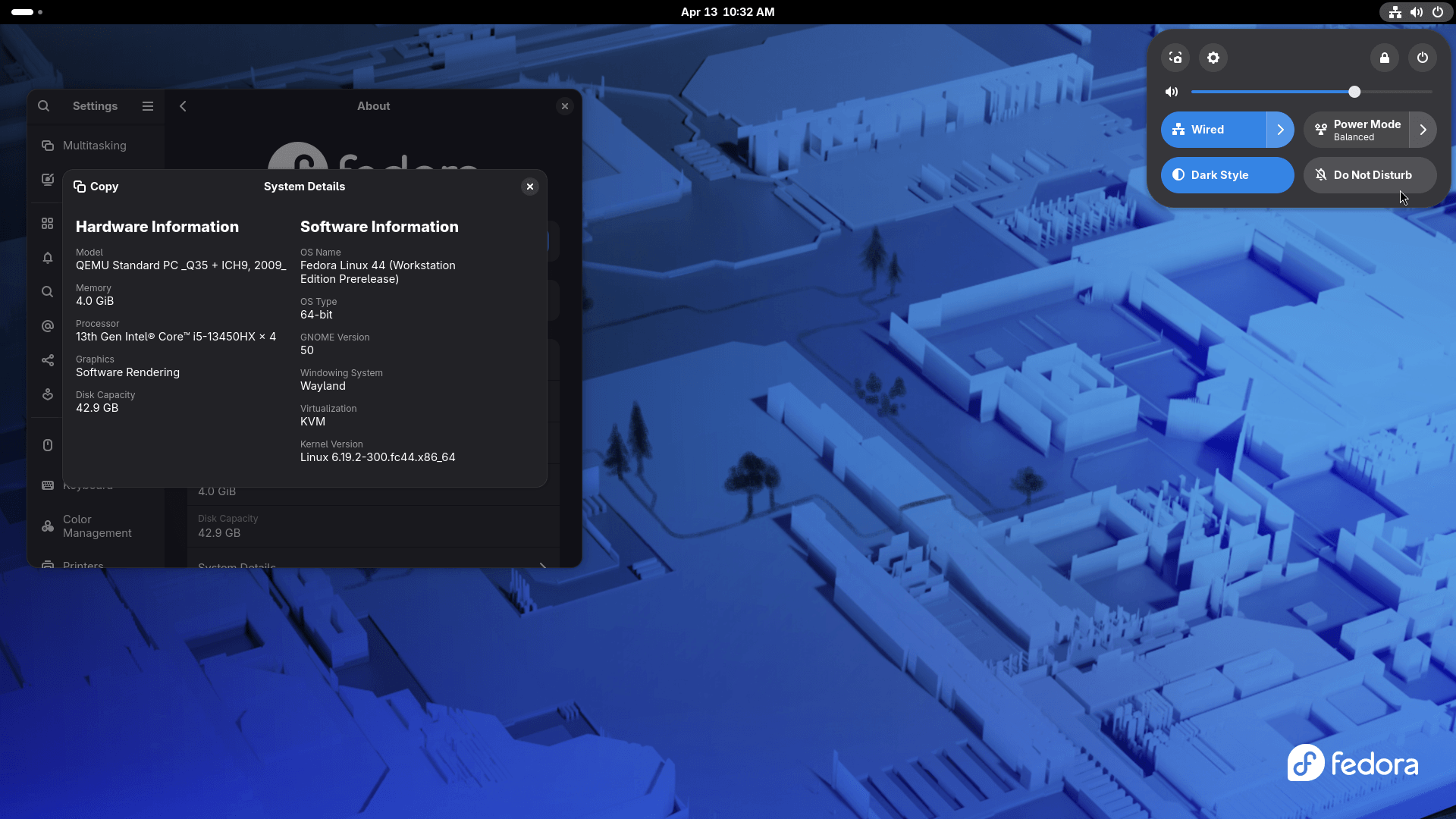
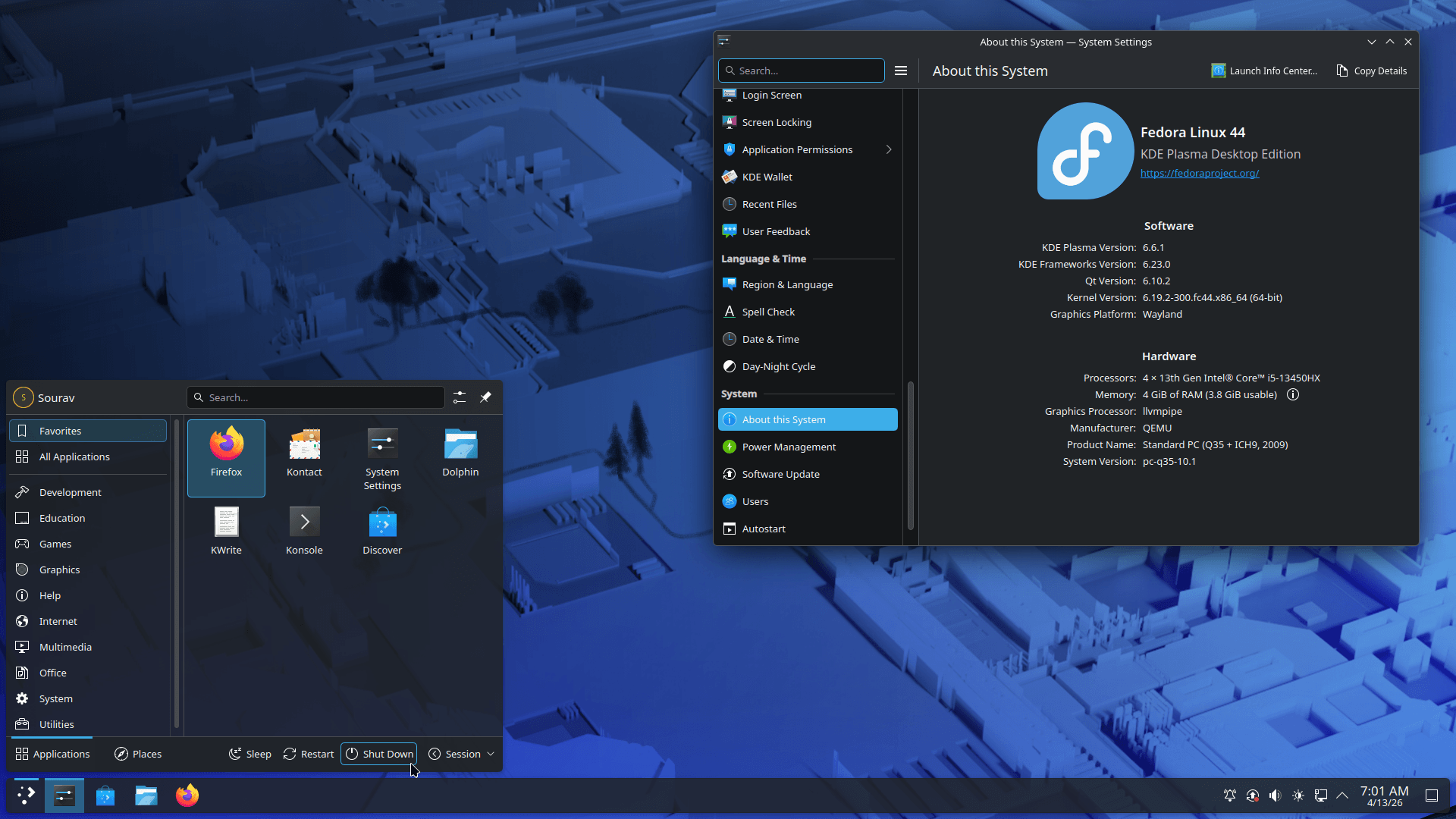
The release ships with Linux kernel 6.19, which introduces expanded hardware support, and some noteworthy improvements for gaming that we will talk about later. Both desktop variants, Workstation and KDE Plasma Desktop, arrive with fresh wallpapers, as is tradition with every Fedora release.
Workstation gets GNOME 50, which finalizes the removal of X11 from GDM and promotes variable refresh rate and fractional scaling to stable status. KDE Plasma Desktop bumps up to Plasma 6.6, which introduces a post-install setup wizard and swaps out SDDM for the new Plasma Login Manager as the default across all KDE variants.
Beyond the desktops, this release brings meaningful improvements to gaming through the NTSYNC kernel module, a reworked Games Lab spin, a freshly updated GNU toolchain, and a range of language runtime upgrades.
There's quite a bit packed in here! 😃
GNOME 50
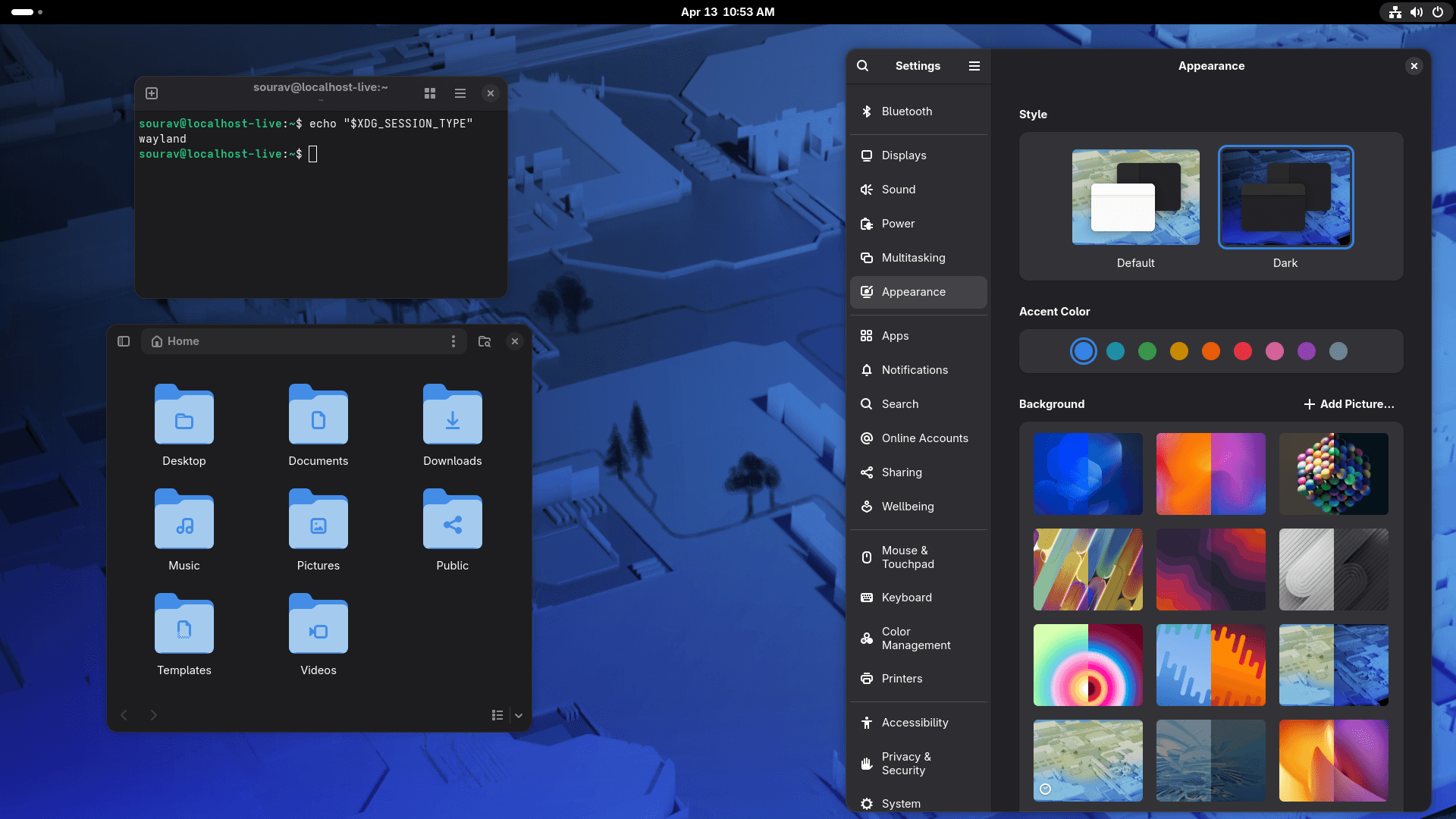
GNOME 50 is the flagship desktop for Fedora Workstation 44, and it comes with a major change that has been a long time coming. X11 has been fully removed from GDM. The plan was originally to do this in GNOME 49, but a last-minute bug had caused it to be pulled back.
Then there are the two features, variable refresh rate and fractional scaling, that have been sitting behind experimental flags for an awkwardly long time are now stable. If you have a high refresh rate display and have been holding off, then this Fedora release is the right time to try them out.
Additionally, the Files app (Nautilus) picks up case-insensitive path completion in the location bar and switches to GNOME's sandboxed Glycin library for more efficient loading of image thumbnails.
KDE Plasma 6.6
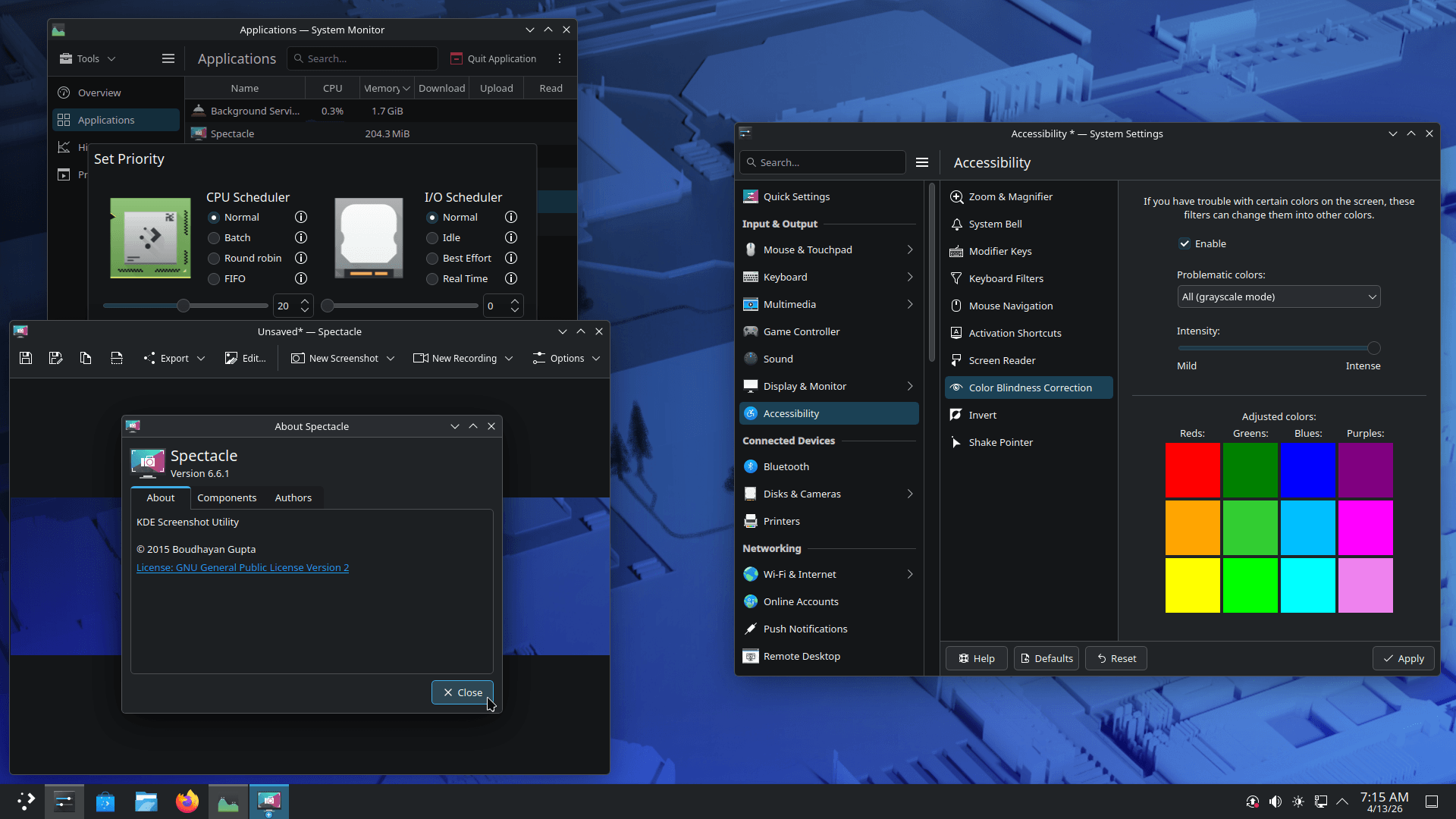
KDE Plasma 6.6 powers Fedora KDE Plasma Desktop 44 in this release, with improvements like OCR support in Spectacle, the screenshot tool. You can now pull text directly out of a screenshot, which can be a genuinely useful thing to have when you are copying error messages or text from images.
Accessibility sees a solid round of additions too. There is a new on-screen keyboard called Plasma Keyboard, a grayscale filter in the Color Blindness Correction settings, and the Zoom and Magnifier tool gains a new tracking mode that keeps the pointer centered.
The release also adds the ability to save your current desktop layout as a custom global theme, ambient light sensor support for automatic brightness adjustment, and Wi-Fi QR code scanning from the system tray's Networks widget.
But wait, there are more KDE-related changes!
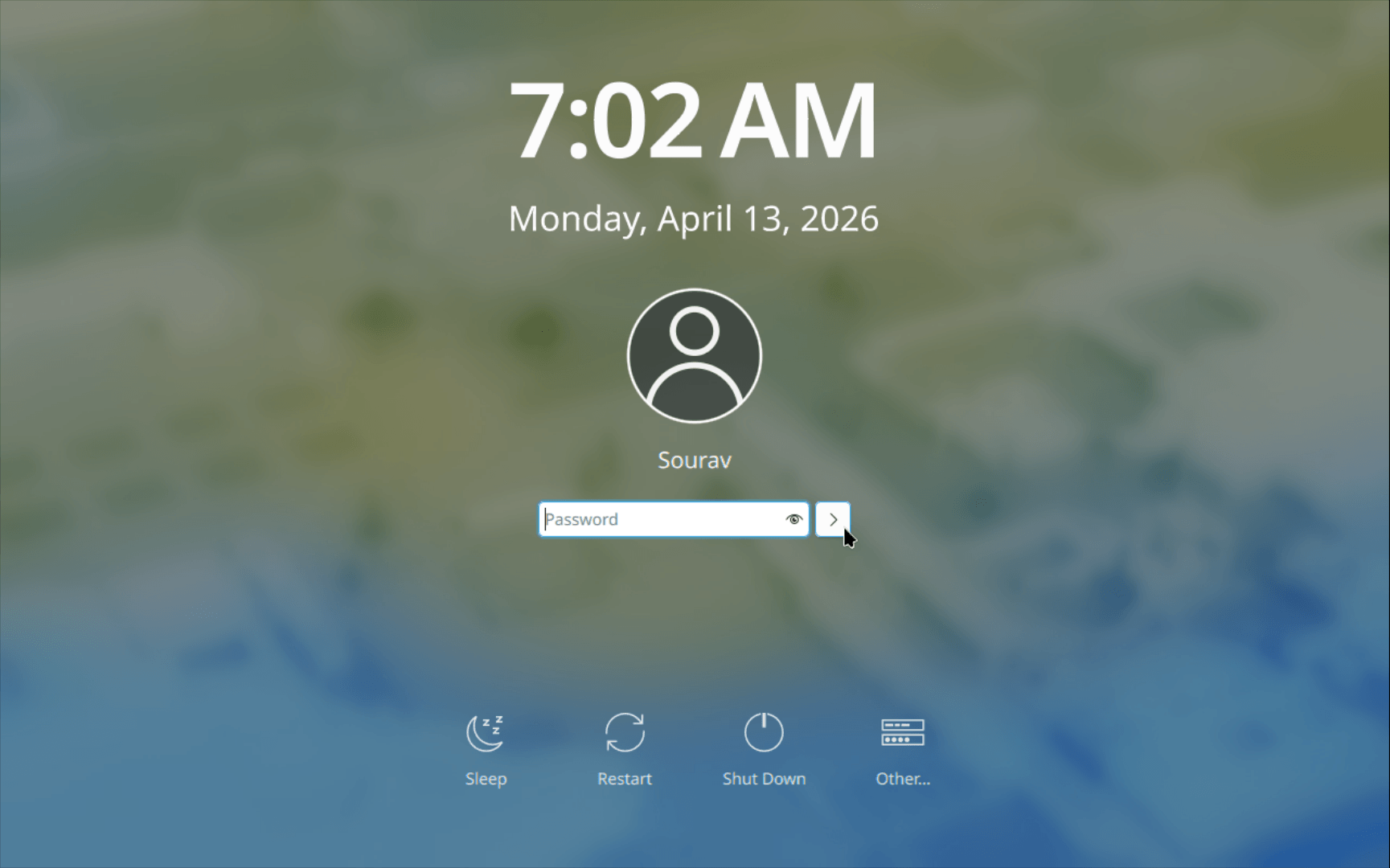

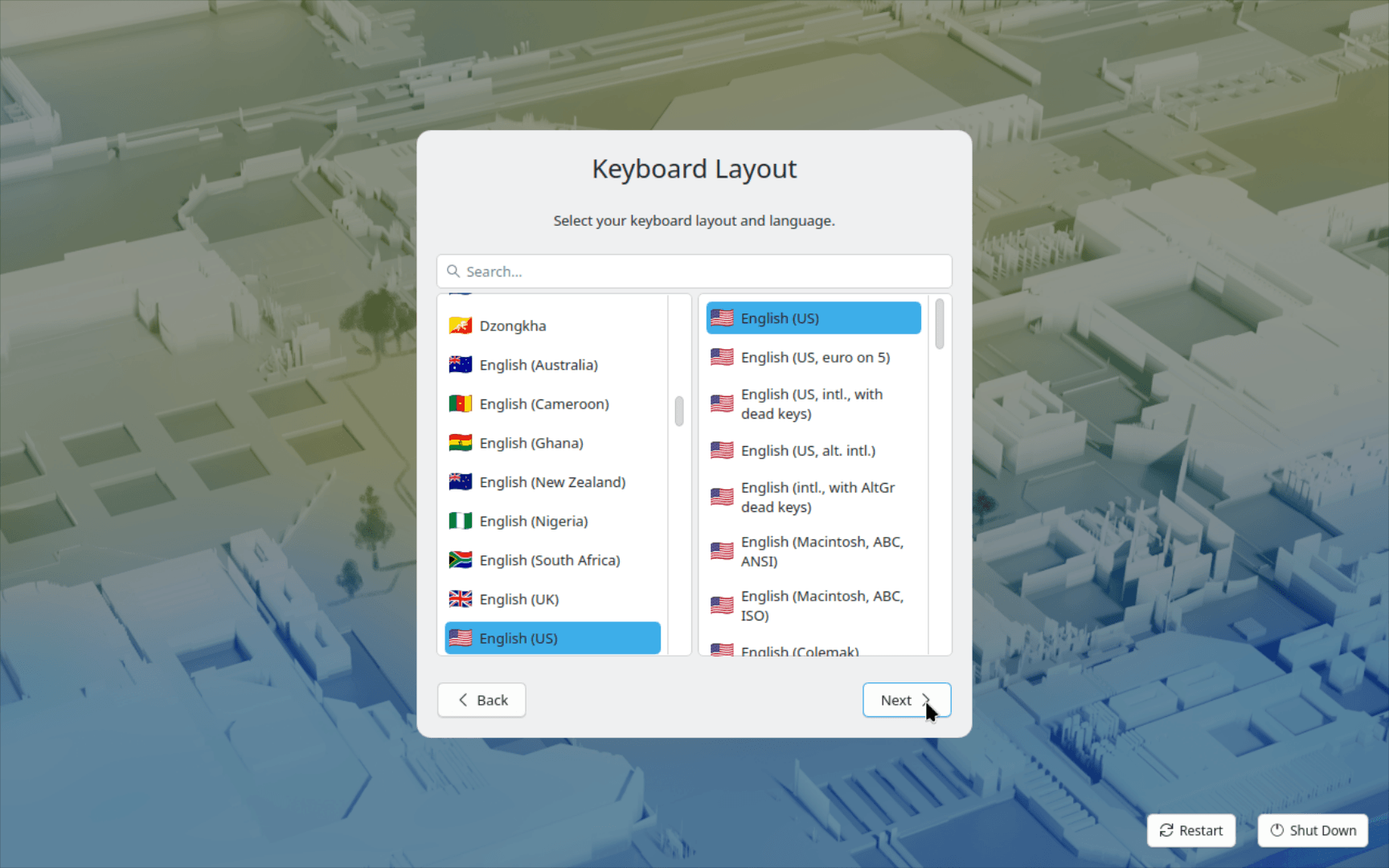
From left to right, we have the login screen and Plasma Setup on Fedora KDE Plasma Desktop 44.
All Fedora KDE variants now include Plasma Setup, a post-install wizard that handles account creation and initial configuration separately from the OS installer, and Anaconda (the installer) has been updated to skip the setup stages that would otherwise overlap with it.
The other notable change for KDE users is the switch from SDDM to Plasma Login Manager (PLM) as the login manager, making Fedora 44 the first distribution to ship it by default.
Gaming is Better Now
Installing Wine, Steam, or open source game launchers (e.g., Lutris and Heroic Games Launcher) on Fedora 44 now quietly pulls in the NTSYNC kernel module as a recommended dependency. NTSYNC handles thread synchronization at the kernel level, which takes a chunk of work off Wine and Proton's plate.
The result is better Windows game (and software) compatibility and a performance bump in many titles, with no configuration work required from your side.
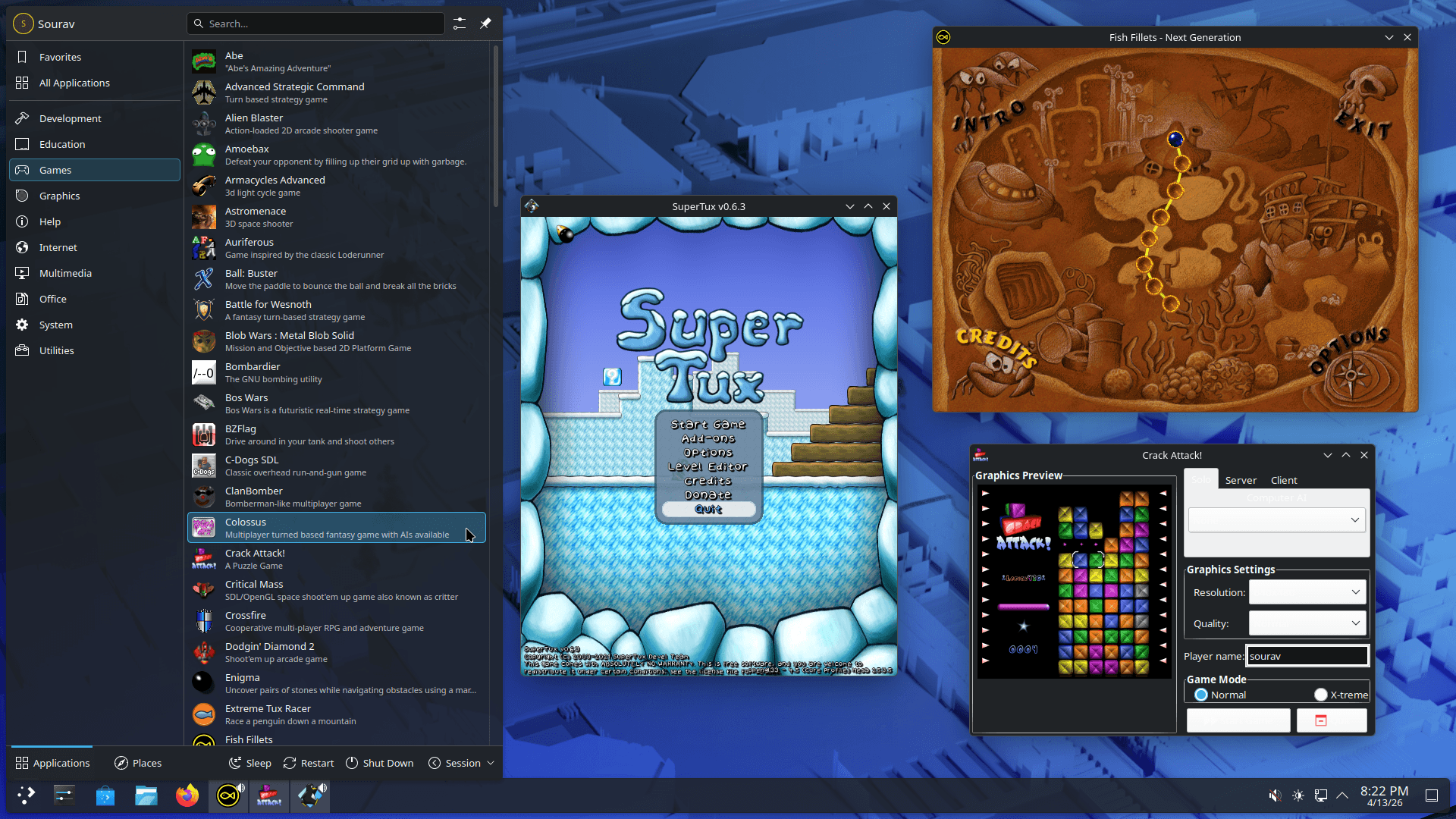
The Games Lab spin also gets a proper refresh. Xfce is out, KDE Plasma is in, specifically for the better Wayland support it brings to gaming workloads.
If you didn't know, this is one of Fedora's curated offerings that brings together a decent spread of open source games across genres like turn-based strategy, puzzles, and first-person shooters.
Toolchain Upgrades
Fedora 44 also brings a pack of toolchain and language runtime updates, keeping it well-positioned as a development platform:
- PHP 8.5
- LLVM 22
- CMake 4.0
- Golang 1.26
- Ansible 13 (Core 2.20)
- Ruby 4.0 (up from Ruby 3.4 in Fedora 43).
- MariaDB 11.8 as the new distribution default (up from 10.11).
- GNU Toolchain: GCC 16.1, glibc 2.43, binutils 2.46, gdb 16.3.
📥 Download or upgrade to Fedora 44
This release of Fedora is offered for Workstation, KDE Plasma Desktop, Server, IoT, and the various spins. You can either pick a relevant ISO from one of those or visit the official website for an overview of this release.
Existing Fedora users can upgrade through their software center. Open Software (Workstation) or Discover (KDE Plasma) and look for the upgrade notification banner to begin the process.
Users of other Fedora spins need to upgrade using DNF. We have a dedicated Fedora upgrade guide to help you.
Enjoyed this update? Support independent Linux news coverage
It's FOSS has been helping people use Linux for the past 14 years. Help us stay independent from big tech. Become a Plus member, enjoy ad-free reading and get 5 eBooks.